1st - Plumed Shells Temple
2nd - Jaguars Temple
finally - Quetzalpapalotl Temple
First, to avoid any confusion, the Puma/Jaguar Mural Temple and the Jaguar Temple are different things.
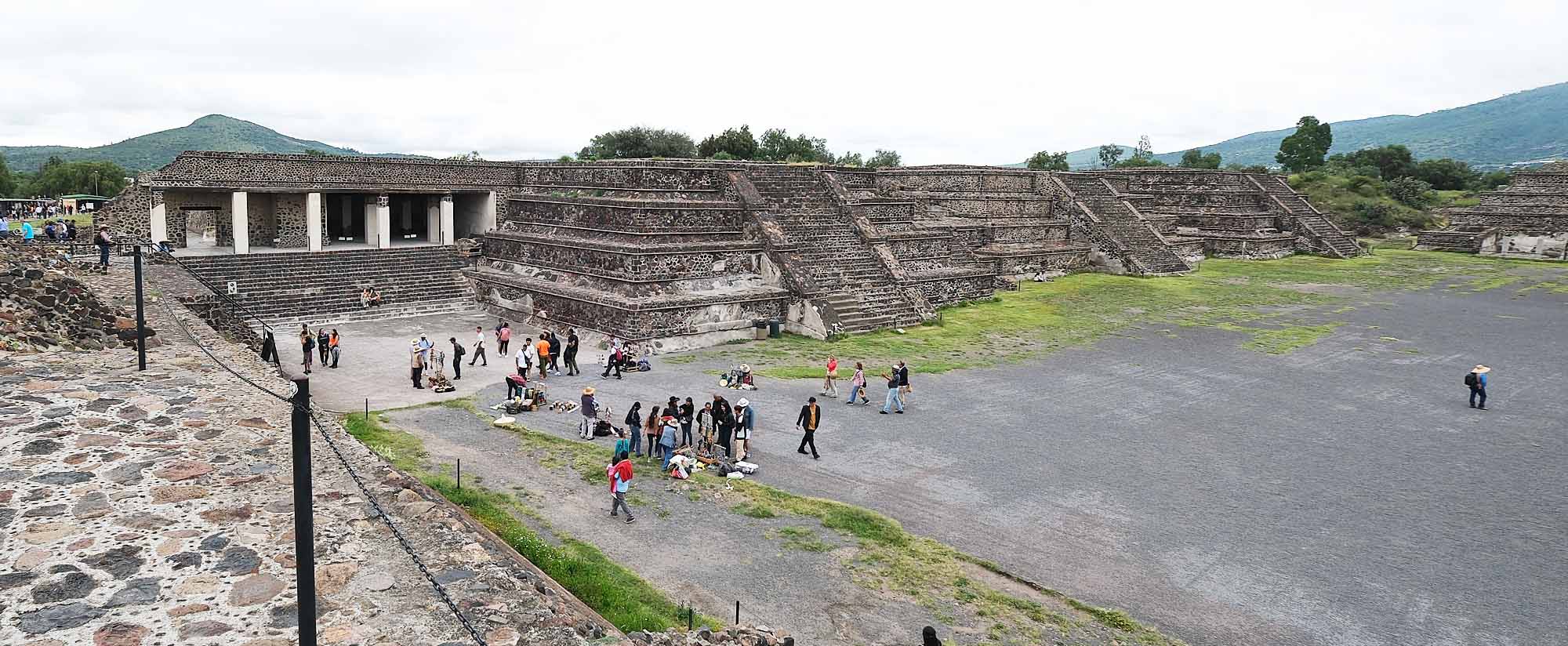
This is the west side of the Plaza de la Luna. You can see the white colonnade. This is the Temple of the Feathered Butterfly (also known as the Temple of Quetzalpapartol). Below it is the Temple of the Feathered Shell, and just to the west is the Temple of the Jaguar, both of which overlap.
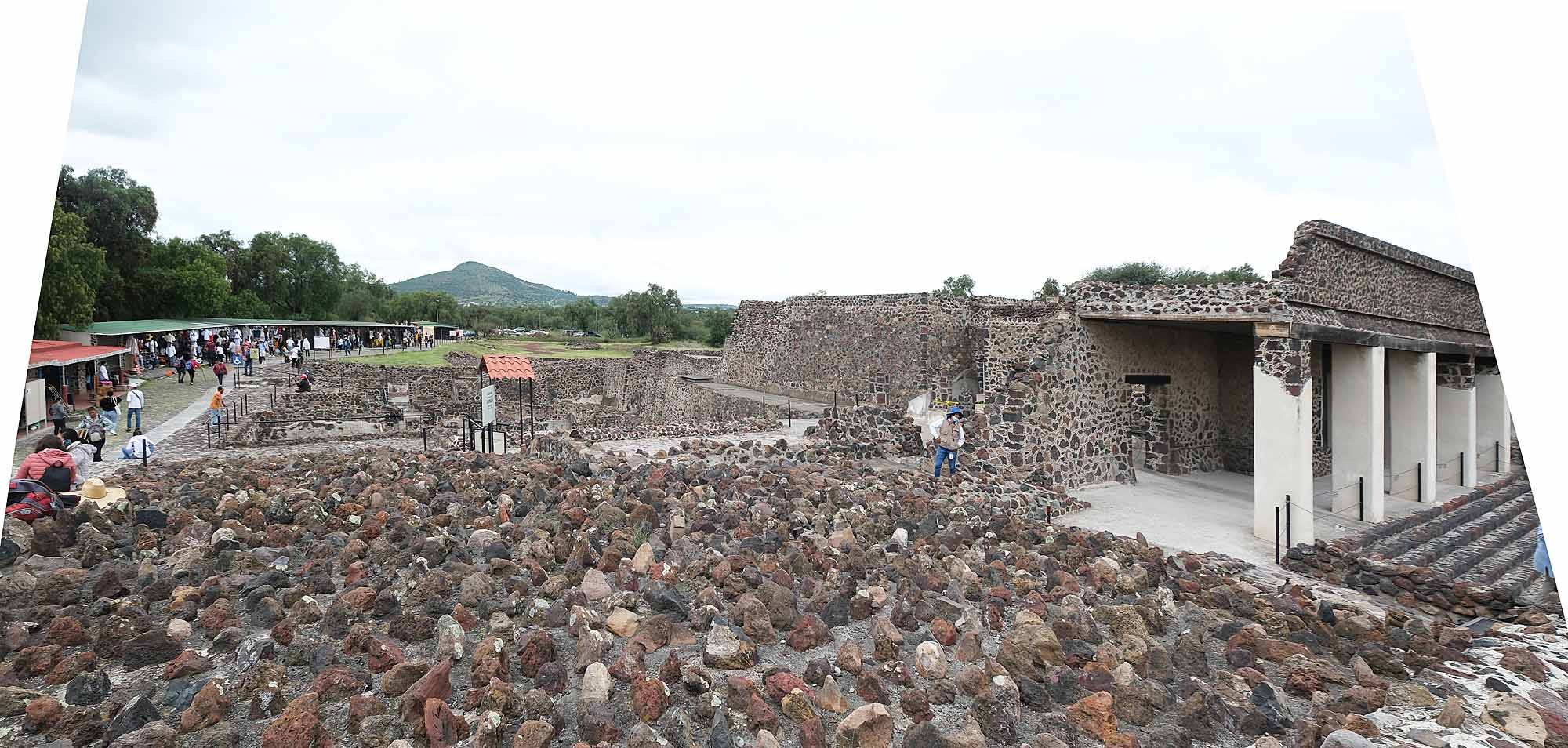
These three temples are located almost facing the Plaza of the Moon, so they are thought to be of high rank.
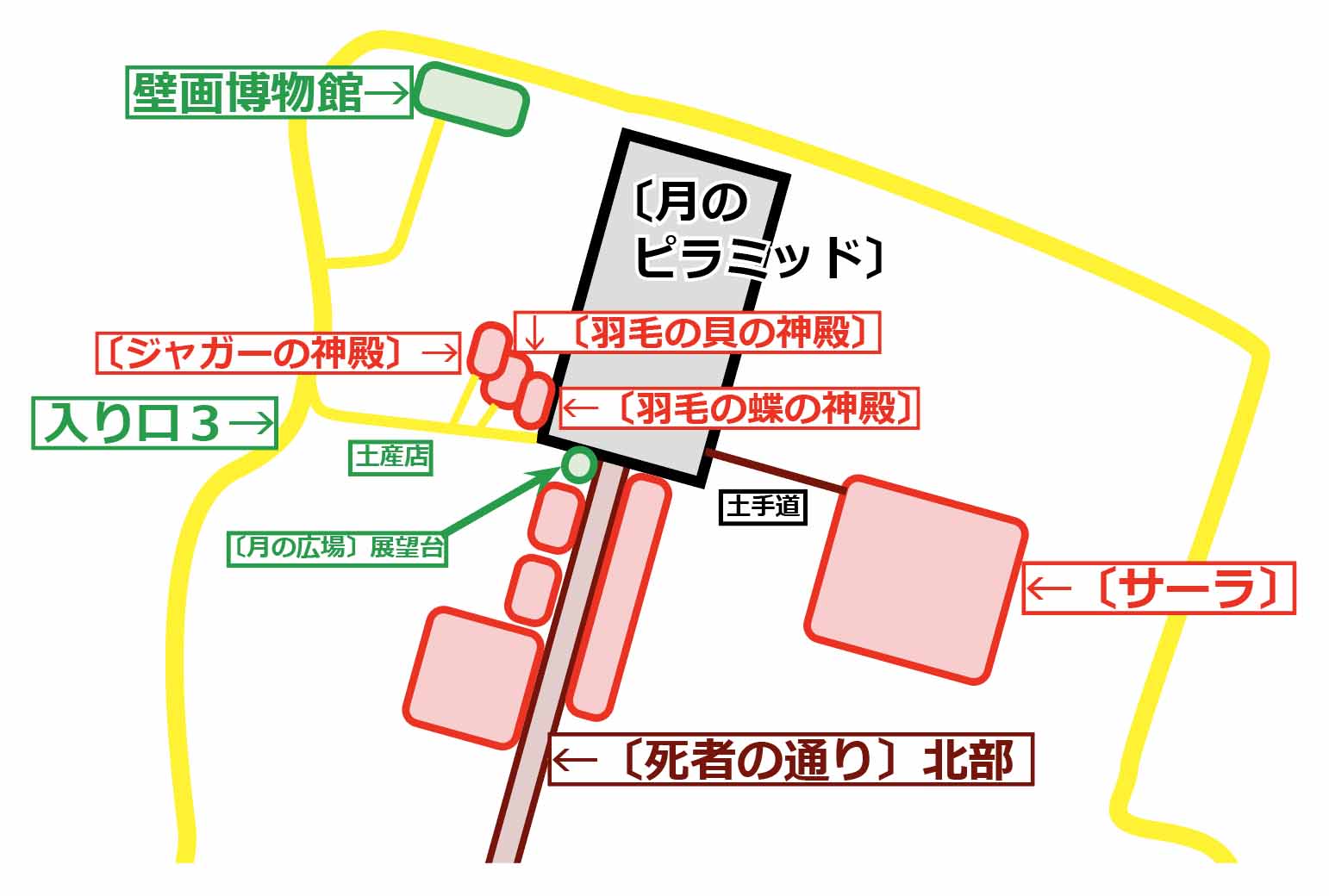
This photo looks northwest from the observation deck. From the left, there is the souvenir shop, the path to Exit 3, part of the Temple of the Jaguar, and on the far right is the Temple of the Feathered Butterfly. In the center of the photo, buried underground, half covered by the other two temples, is the Temple of the Feathered Shell.
100-250 AD...black line...The Temple of the Feathered Shell was built.
350 AD...green line...The Temple of the Jaguar was built, covering the western half of the Temple of the Feathered Shell.
450 AD...red line...The Temple of the Feathered Butterfly was built, overlapping the eastern half of the Temple of the Feathered Shell.
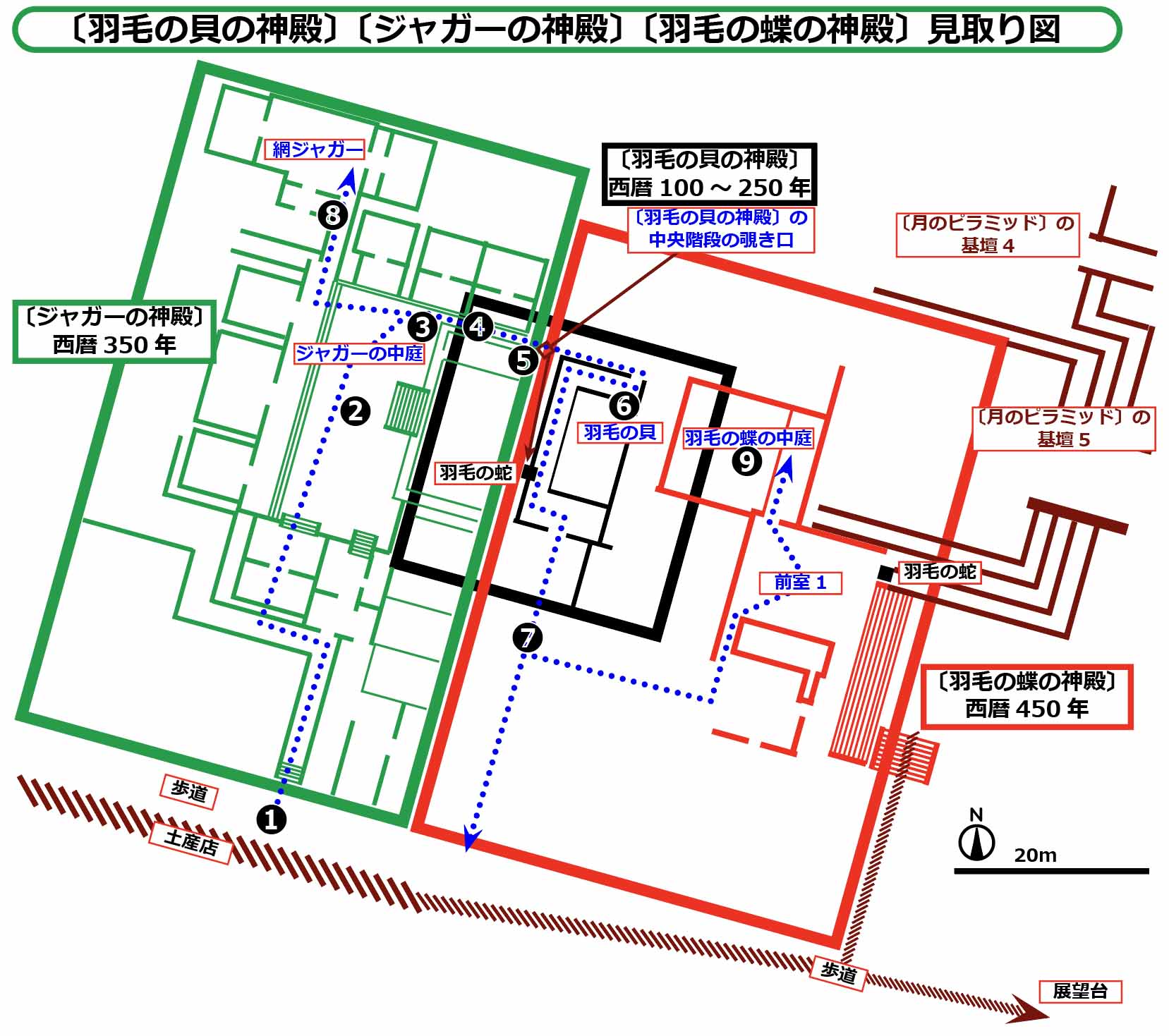
The tour route is indicated by the blue dotted line.
Route 1↓...Whether you enter the ruins park from Puerta 3 or from Moon Plaza, follow the path that leads from the souvenir shop street to the Jaguar Temple.
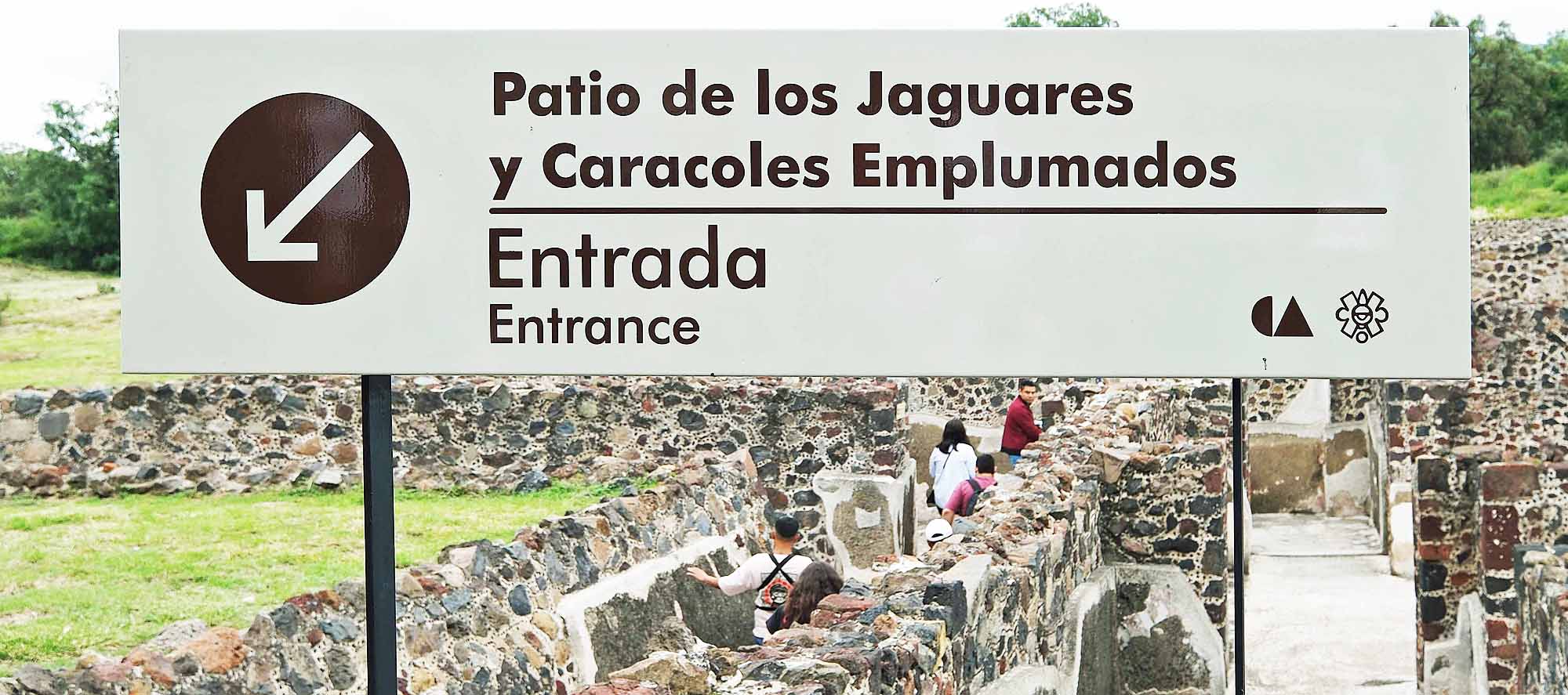
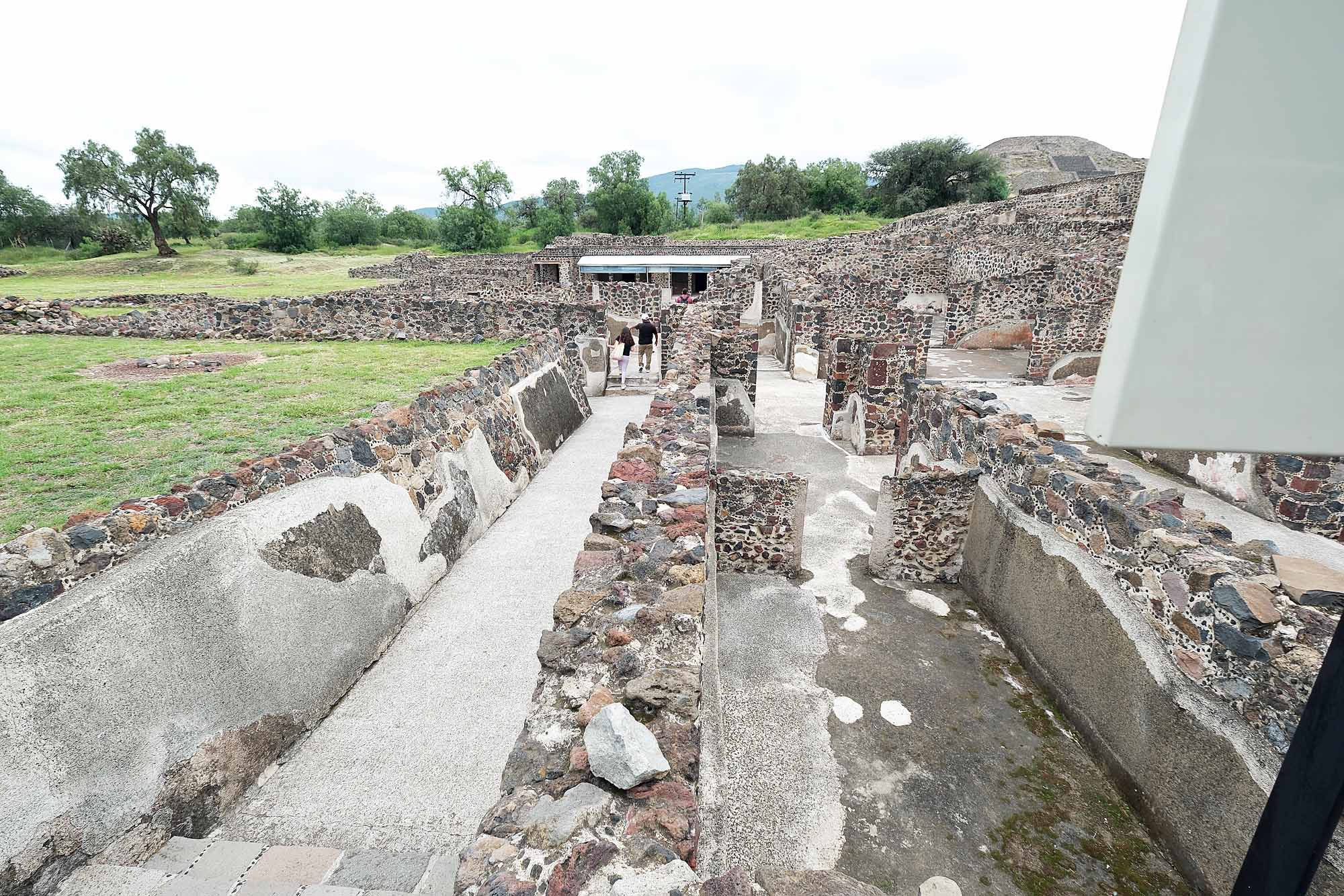
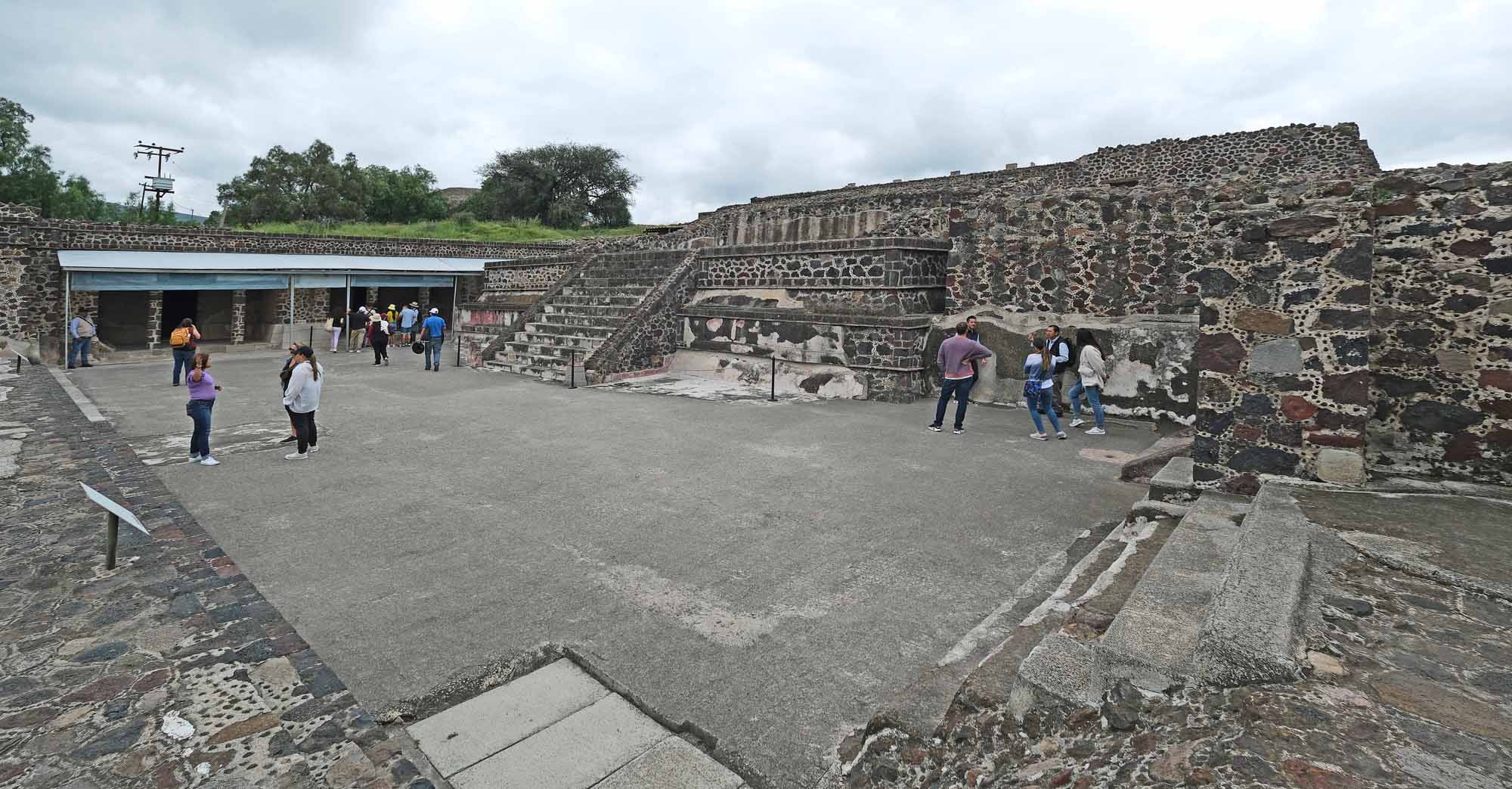
Route 2↓... Enter the courtyard of the Temple of the Jaguar. Here, look up at the central staircase of the Temple of the Jaguar on the east side. Behind it, on the back side, is the Temple of the Feathered Shell.
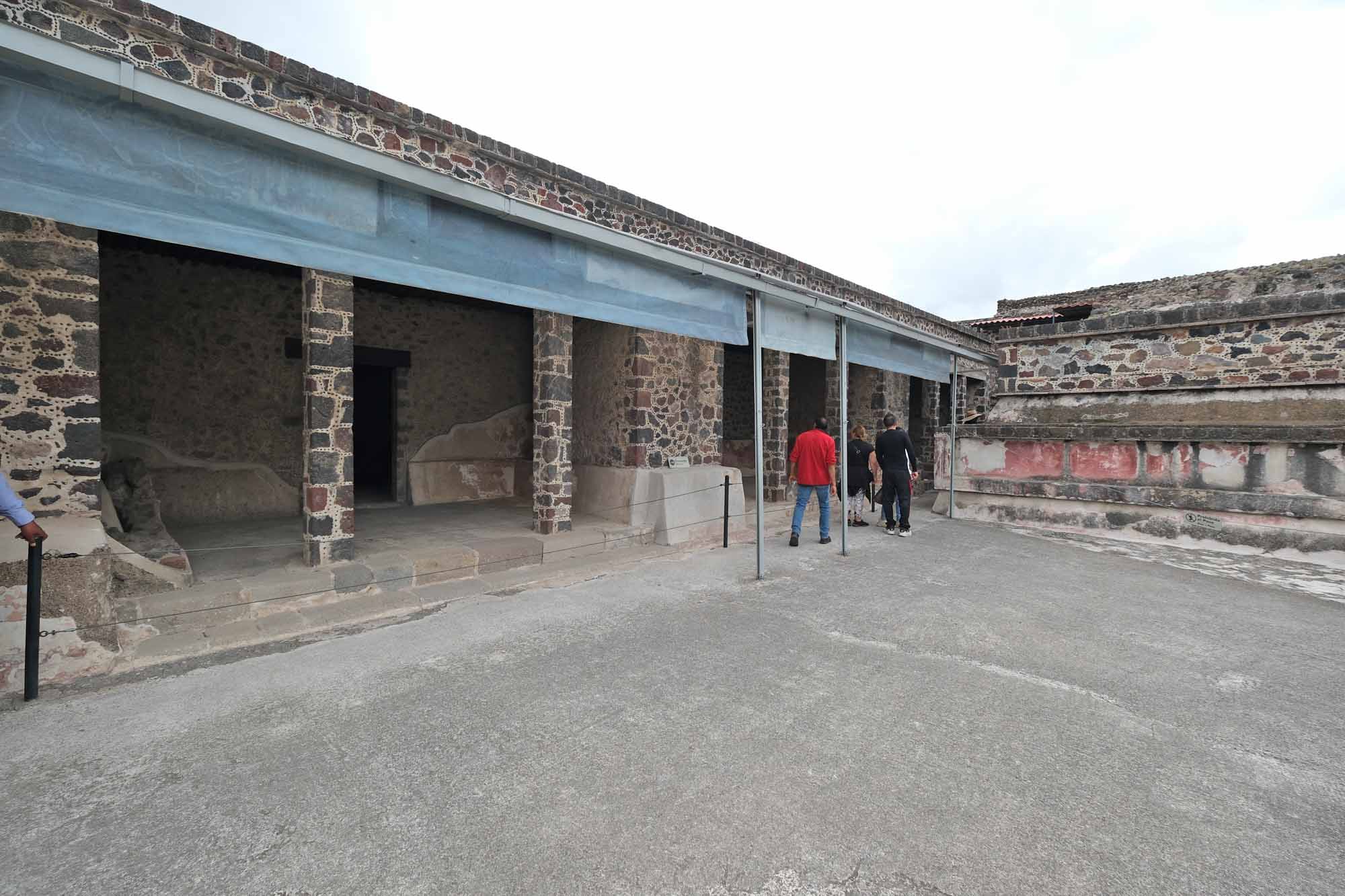
Route 3↓...Walk to the northern edge of the plaza of the Jaguar Temple, suppress your urge to see the murals, and head further to the right.
Route 4↓...Then you will come to a passageway leading east. Along the way, there is a fenced-off space on the right, so look inside.
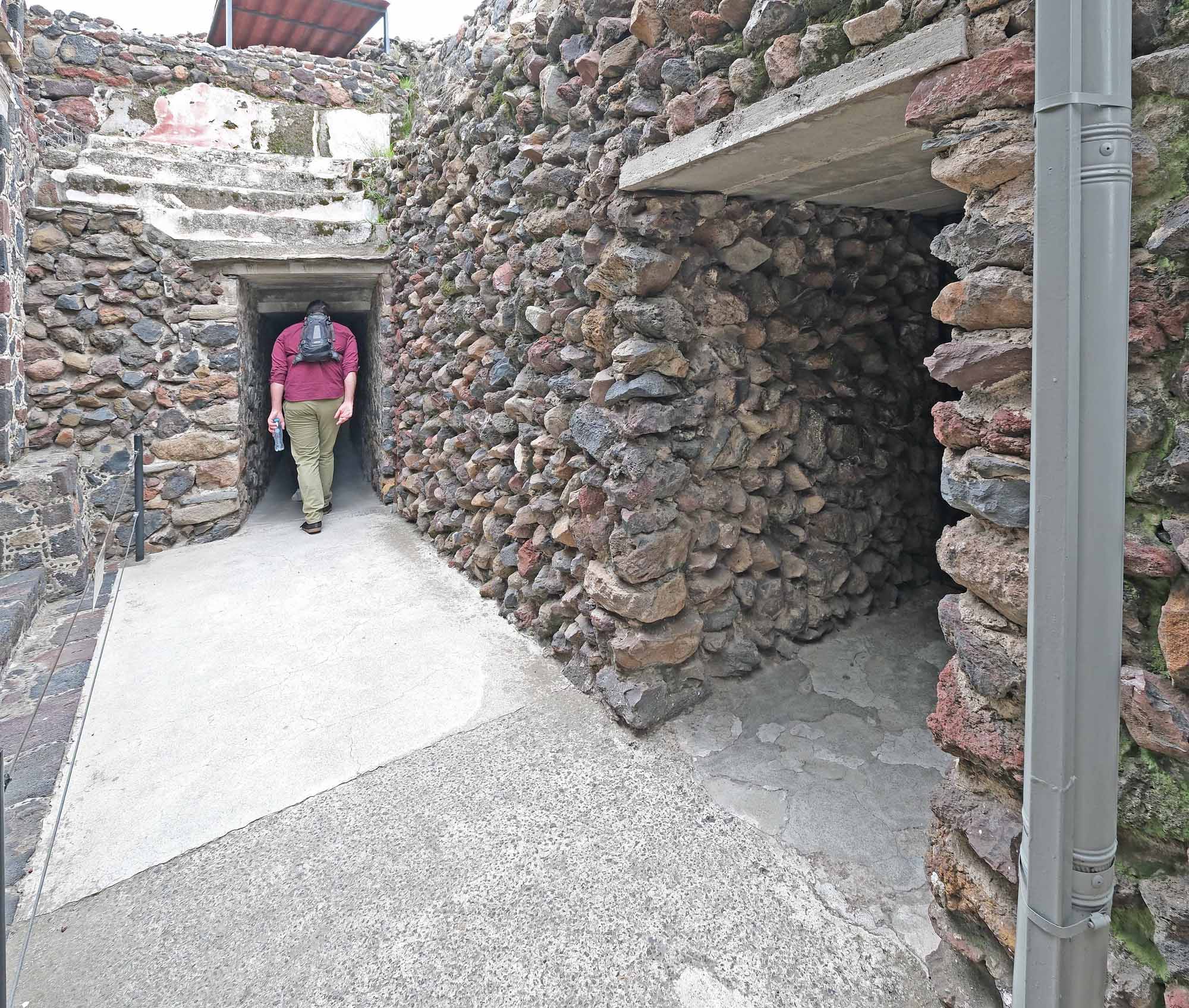
Route 5↓... You can see a staircase leading up to the left. In the upper right corner, you can see one head of the Feathered Serpent. From its position, this staircase looks like the former Temple of the Jaguar. The angle of view from the lattice door is limited, but there may also be another one on the left.
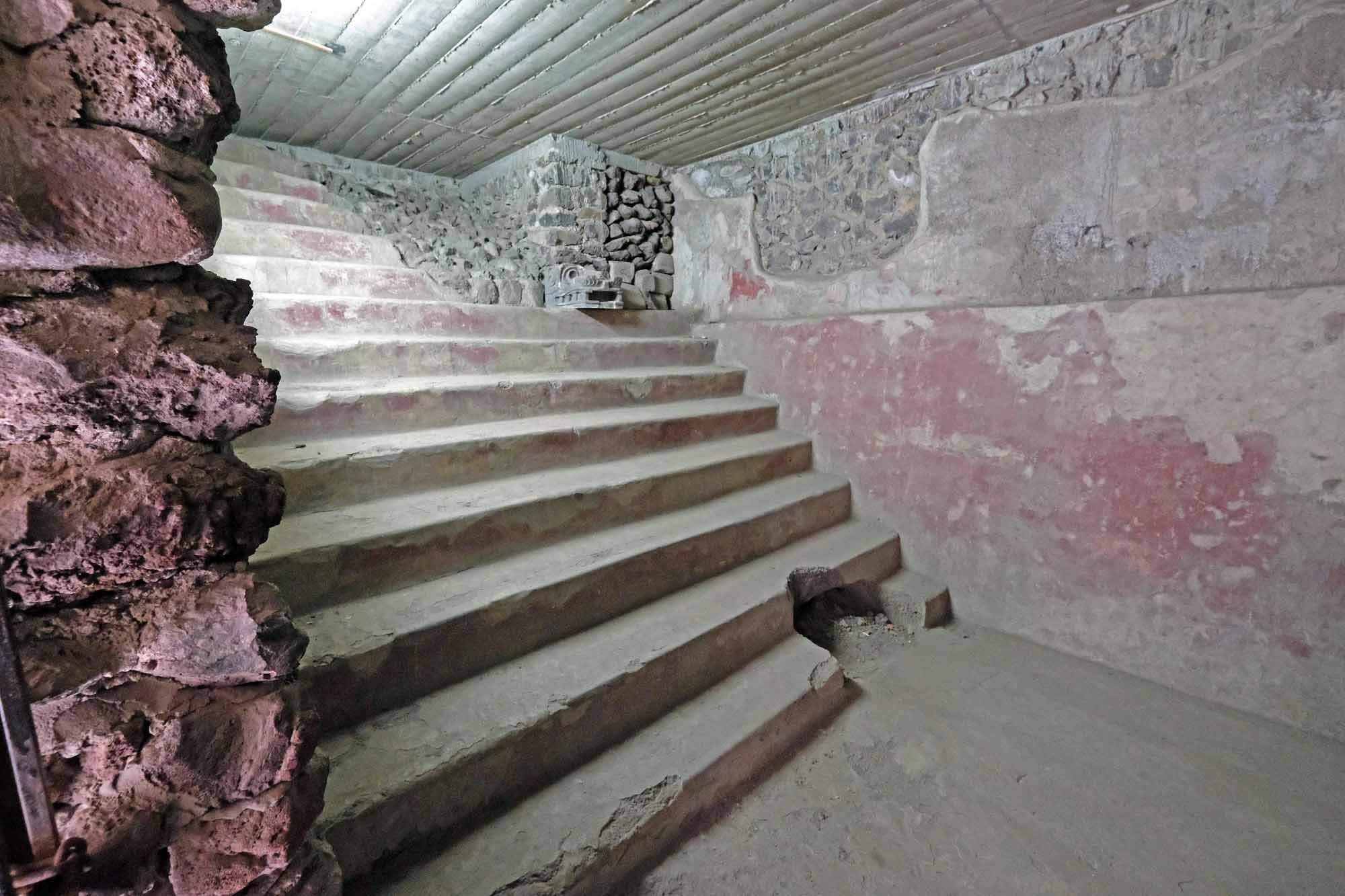
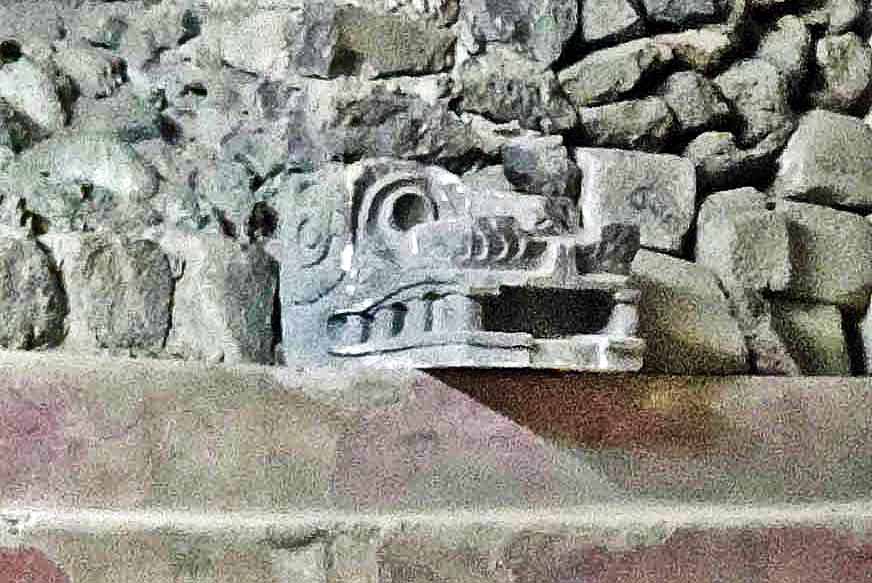
Route 6↓...Follow the passage and you will enter the Temple of the Feathered Shell.
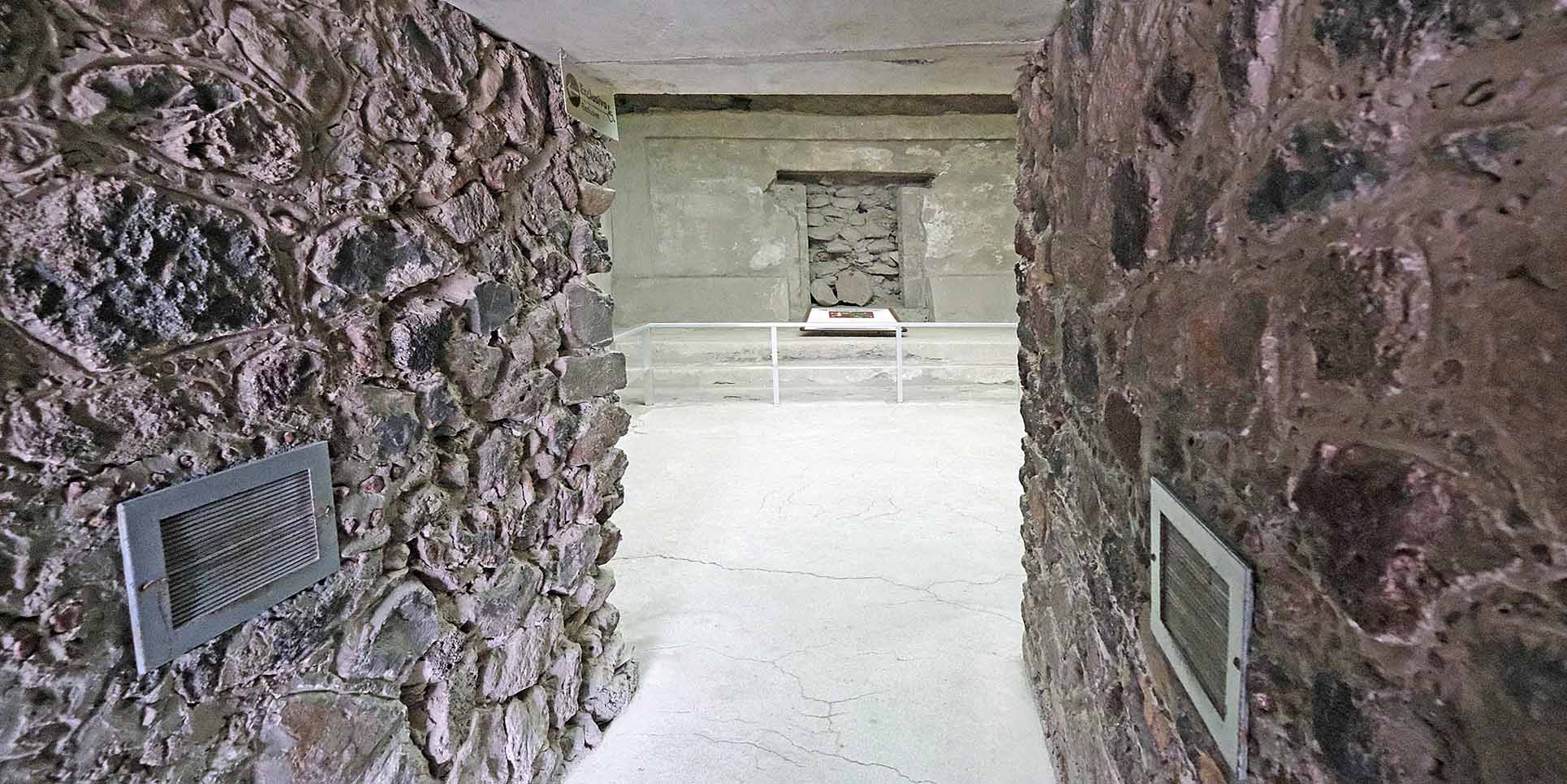
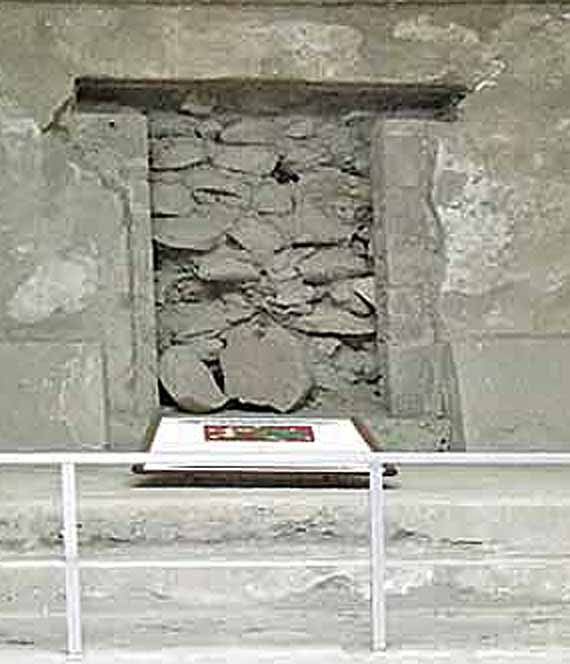
You can see some filling just beyond the doorway directly ahead. When the Temple of the Jaguar was placed on top of the Temple of the Feathered Shell, the cavity collapsed, so this was probably filled with filling. It's possible that the entire space in the Temple of the Feathered Shell was similar, and that the excavation team dug it out and filled it back in.
Let me briefly explain the "feathers" seen in the two temples. Feathers themselves are never depicted alone, but are always attached to "some living creature." Feathers are found on birds and fly up into the sky. This represents the "sky," the highest realm of the universe, and perhaps also symbolizes the source of rain. The headdress of the Net Jaguar introduced in the Temple of the Jaguar has feathers, but they are not actually growing on the jaguar itself, so the meaning seems different.
Now let's take a look at the period from 100 to 250 AD.
Temple of Plumed Shell
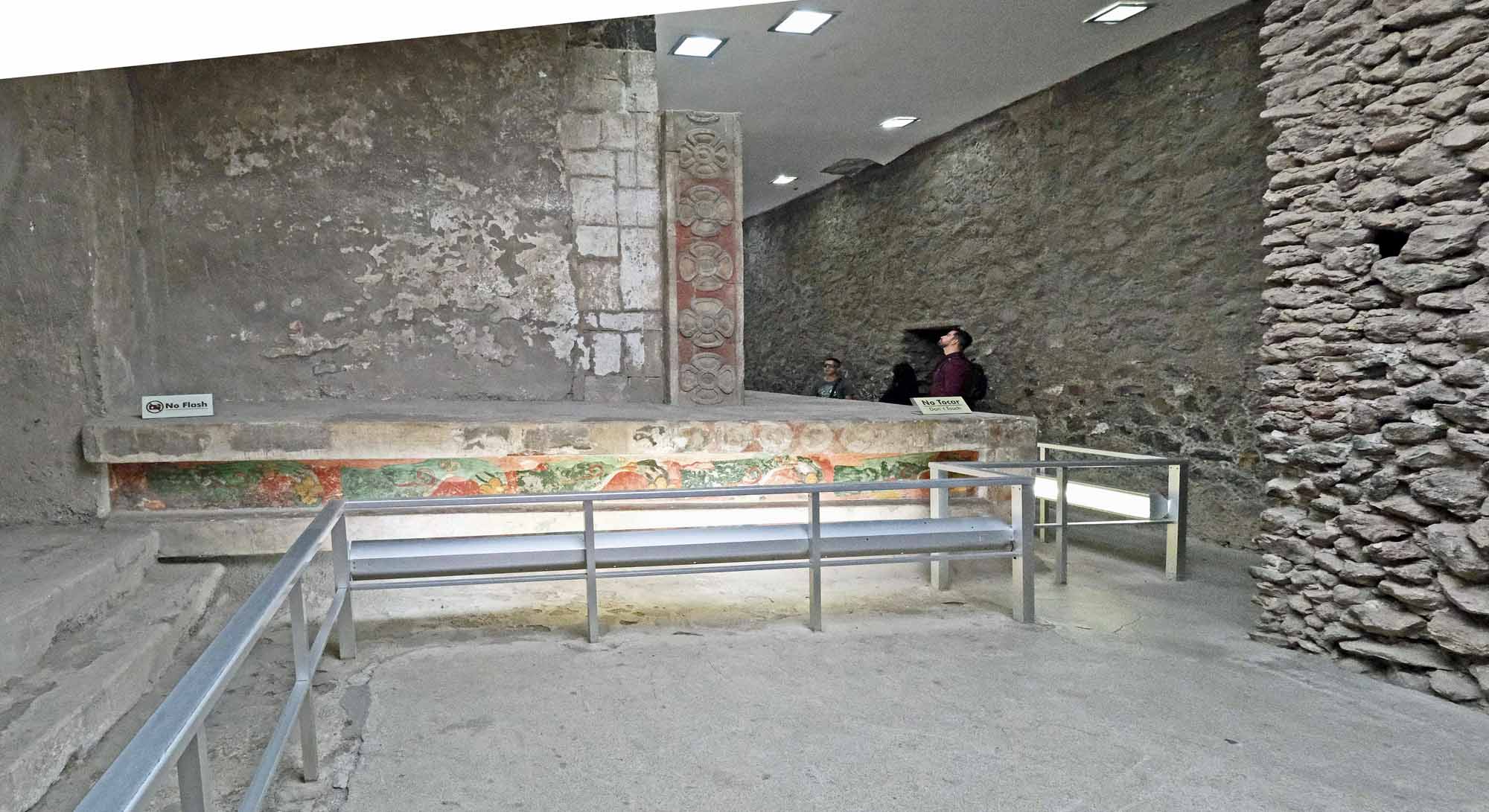
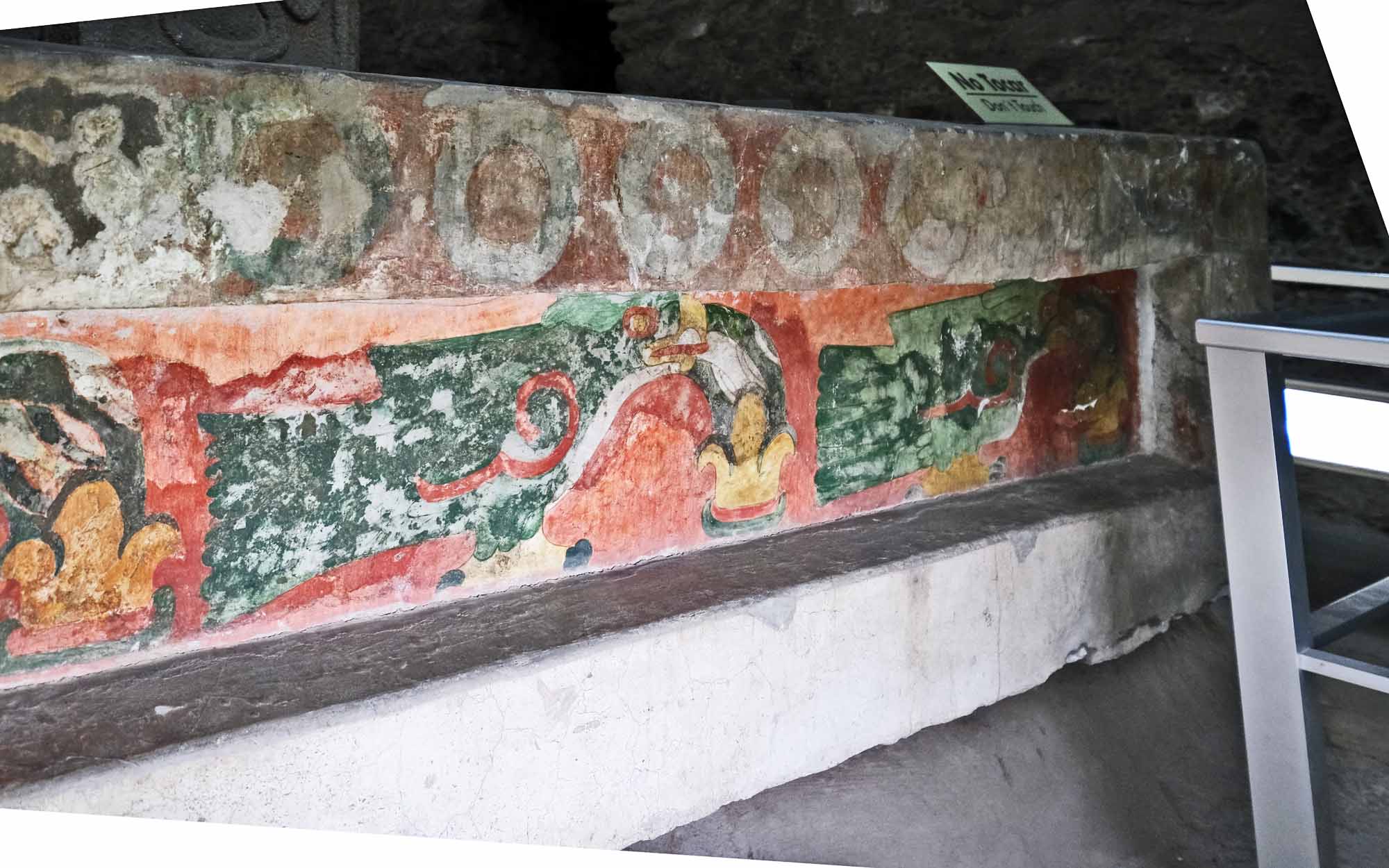
There are green birds on the base. There are also many drops of blood drawn. It seems to represent the bleeding of self-sacrifice rather than the blood of other sacrifices. The frieze above it is lined with thick circles.
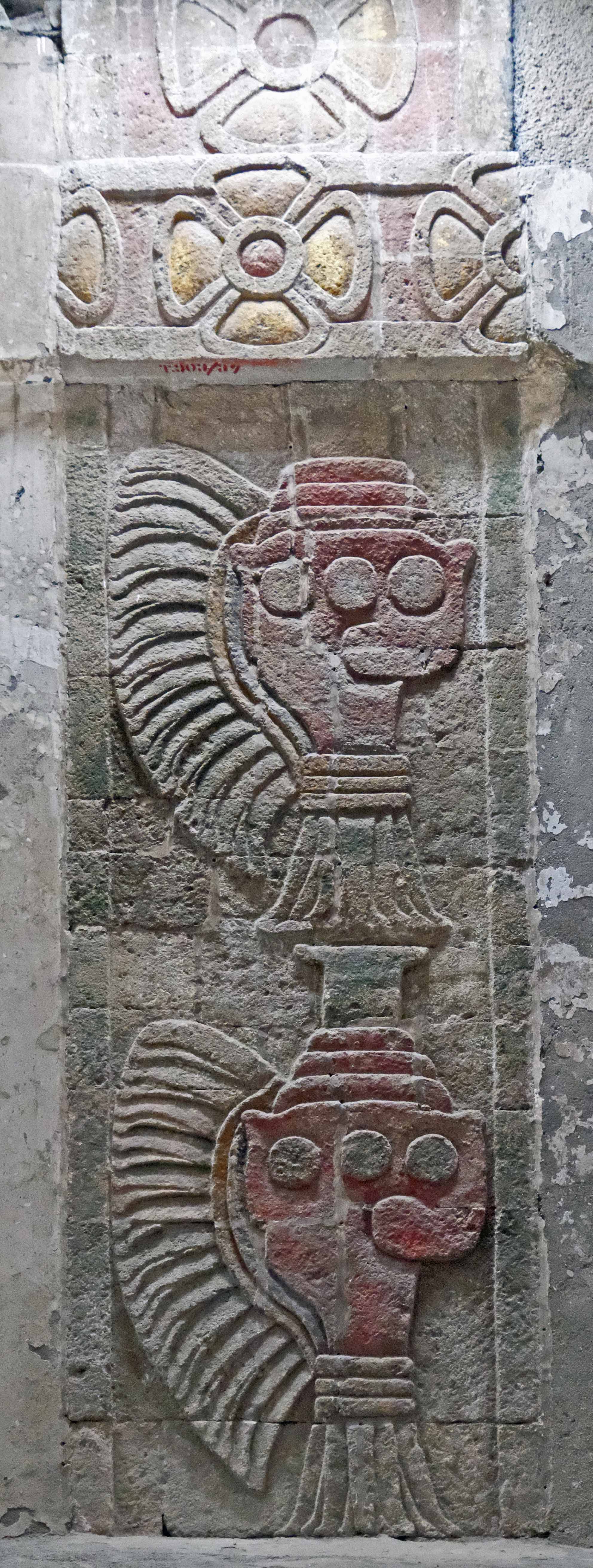
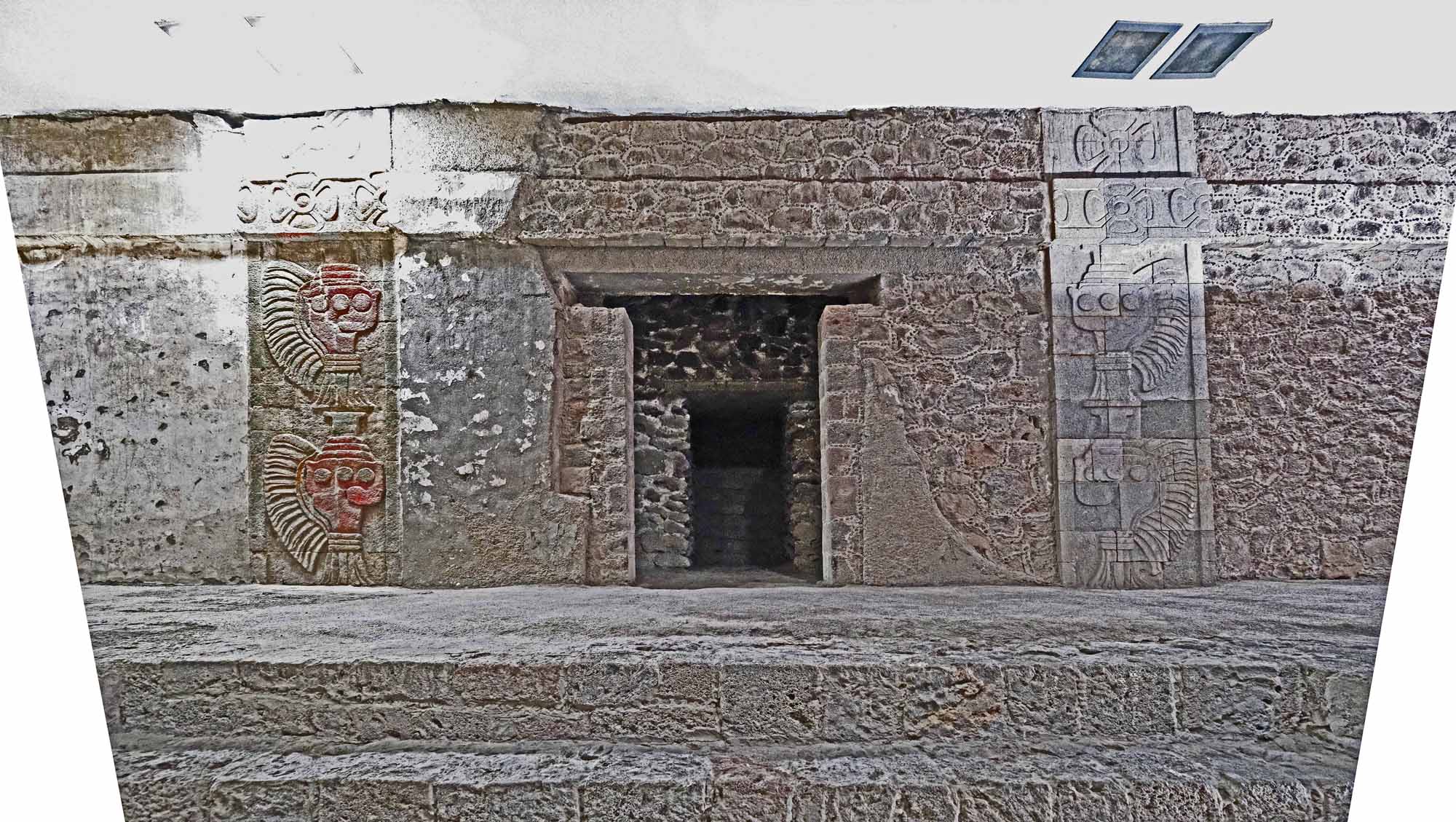
This is the front of the Temple of the Feathered Shell. You can see the stairs in the foreground. Two red feathered shells are carved on each side of the entrance. In the enlarged photo on the left, you can see the fleece above and, above it, large and small yellow four-petal flowers. There is an opinion that the four-petal flowers are the city emblem of Teotihuacan from this period. In a stronger interpretation, the four petals point to the four directions: east, west, north, and south.
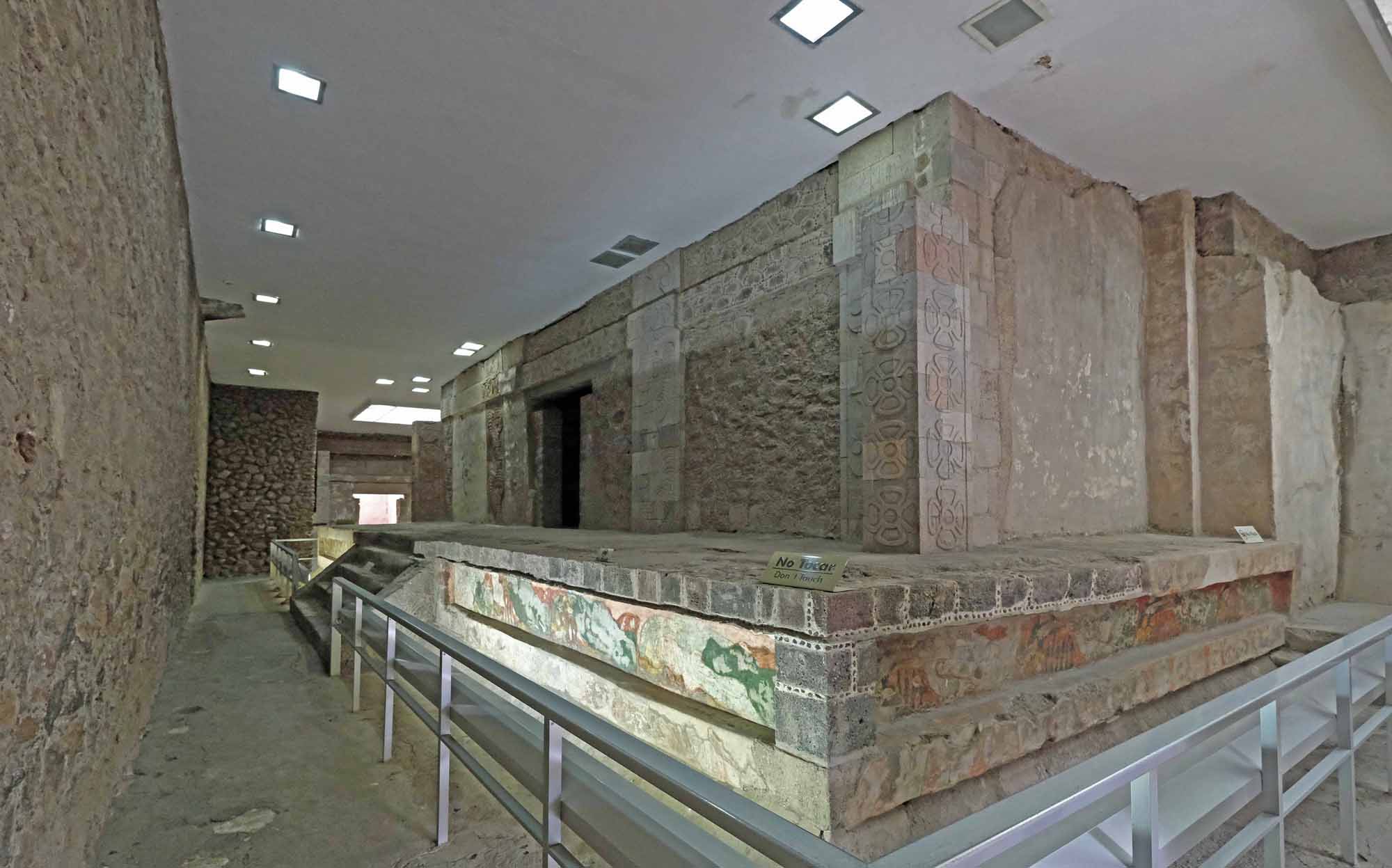
There are not many other buildings that are believed to date from 100 AD to 250 AD. The strong and intricate stonework, the reliefs and murals on the base, and the dignified atmosphere give off a special light. It is as if the spirit of the city from its earliest days is condensed into this space.
By the way, the mural museum has murals from the building on display, clearly marked as having been excavated from the Temple of the Feathered Shell. However, I can't find any inside the temple. Perhaps it's in one of the rooms that have been filled with filling material?
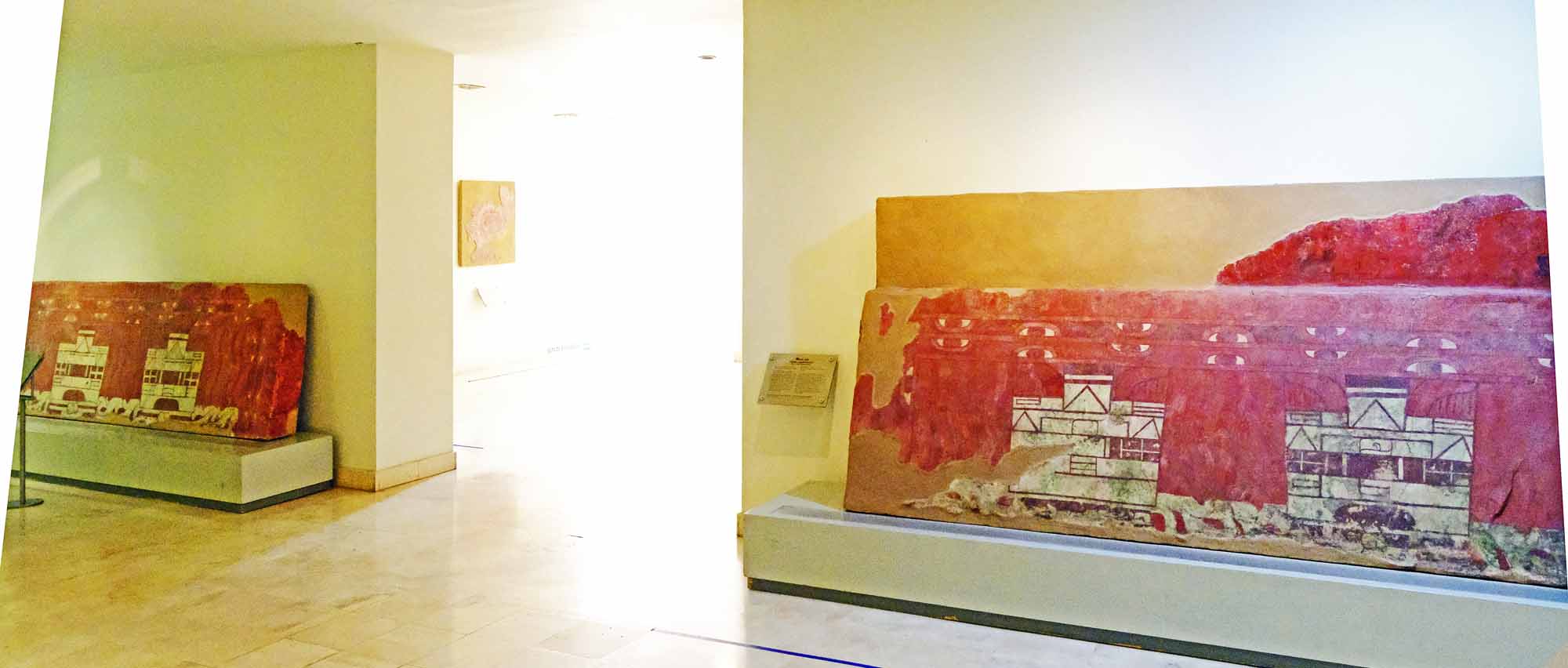
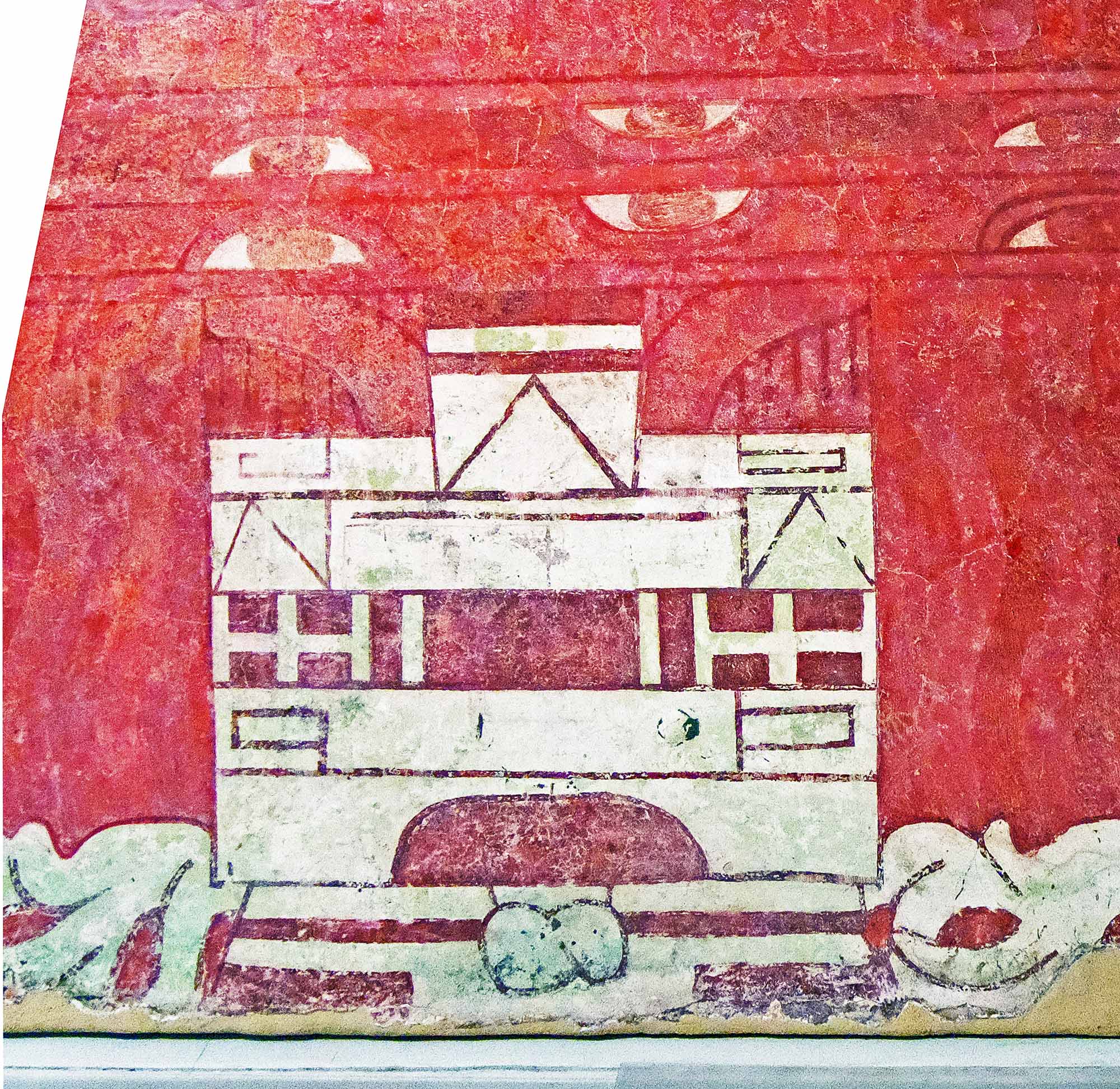
↑↑at Mural Museum.
From the bottom, the building consists of stone steps, a half-oval entrance, a fleece on the first floor, a lattice-patterned or ventilated second floor, the ceiling, and a square alemena (roof trim). No building like this exists in Teotihuacan. Perhaps this is the Temple of the Feathered Shell itself, before the second floor and above were demolished. There are waves around the building, and above, perhaps, a half-open canal. The background also resembles vertically flowing water. It is likely a depiction of some kind of concept.
Route 7↓...Exit. Return to the souvenir shop area, turn right, and enter the Jaguar Temple again.
Temple of Jaguar
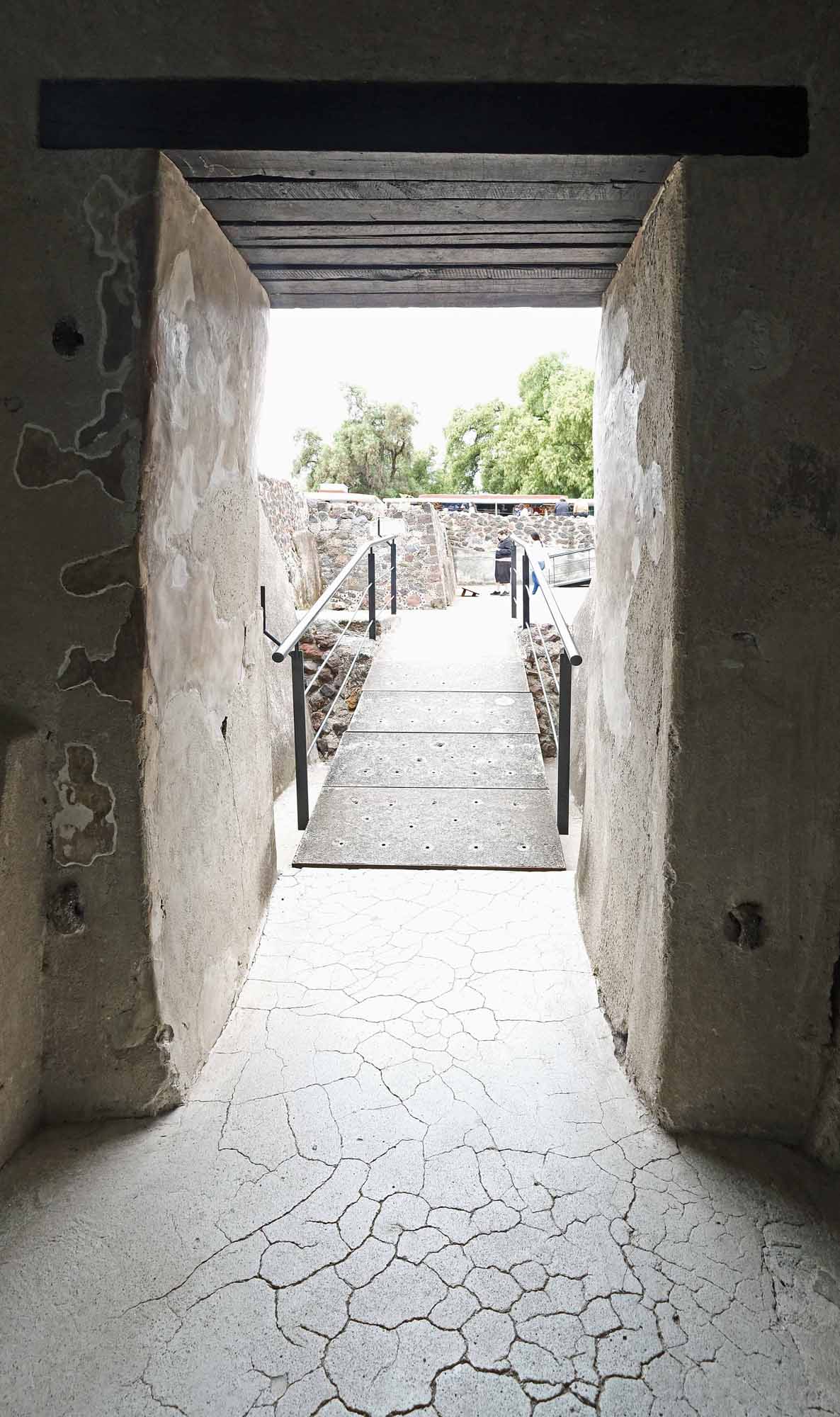
It was built in 350 AD. To enter the center, you pass through the remains of a room, but just before descending into the courtyard, you sense a presence and turn around.
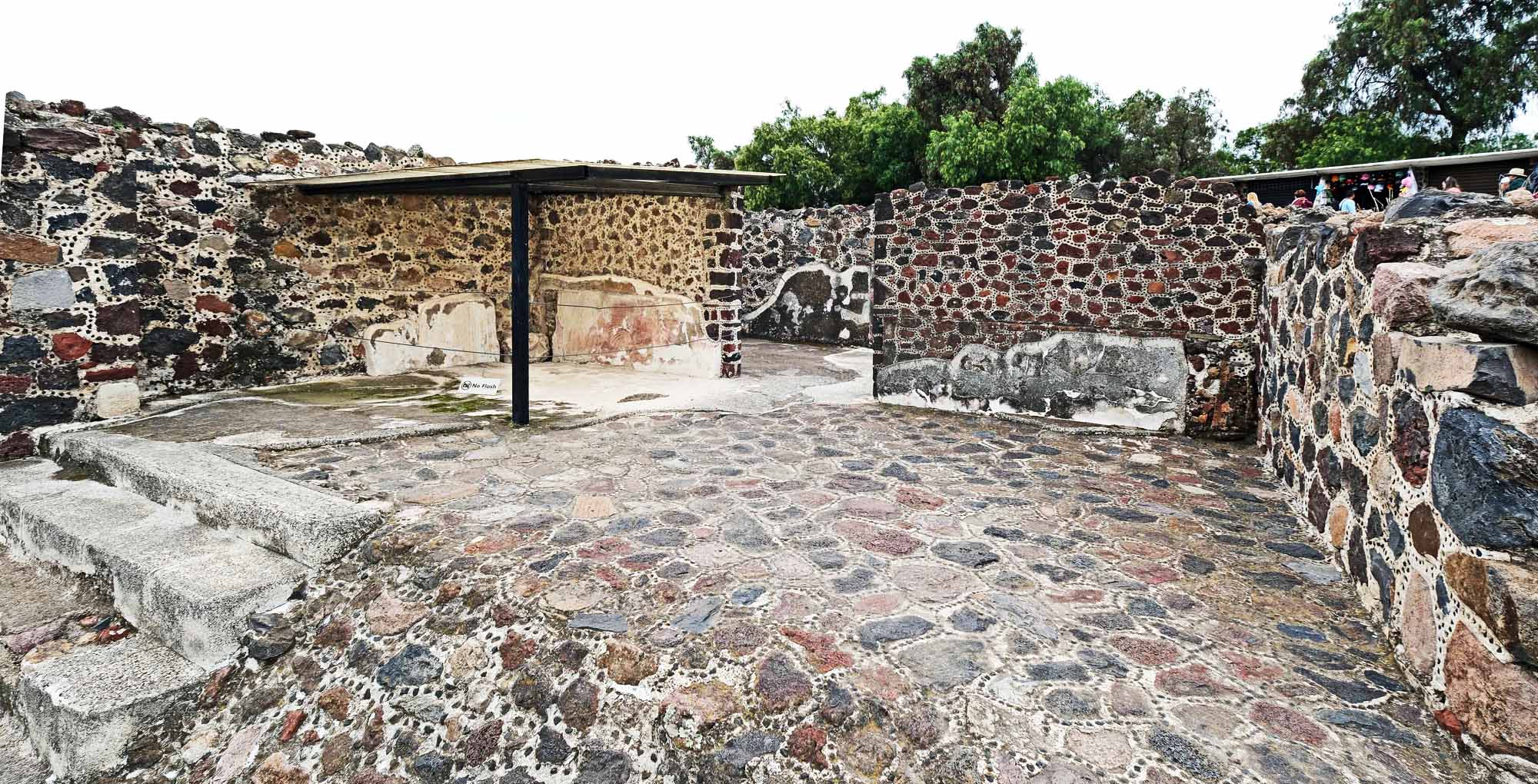
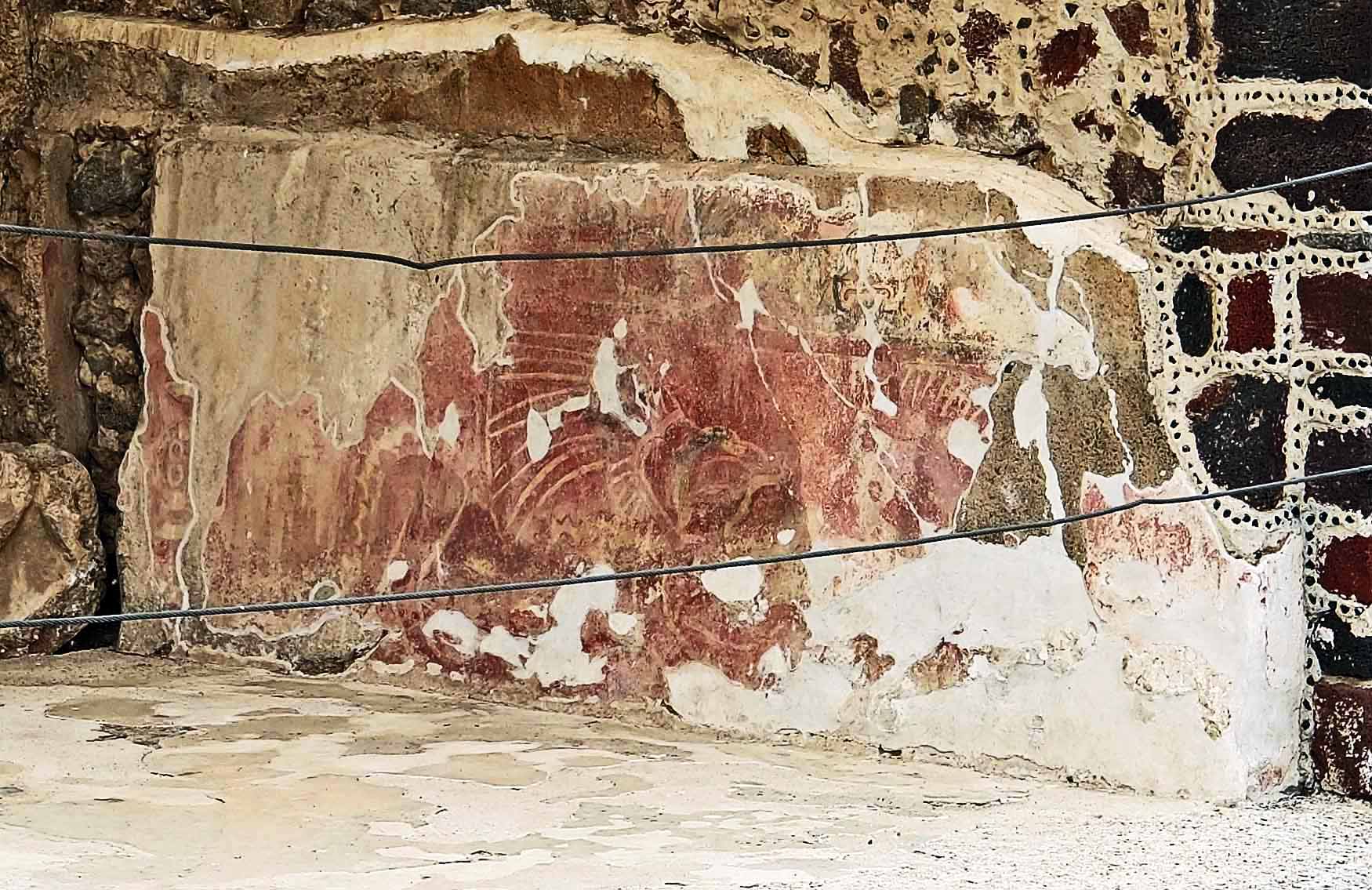
You'll find a mural on the left wall. Let's go
down into the courtyard.
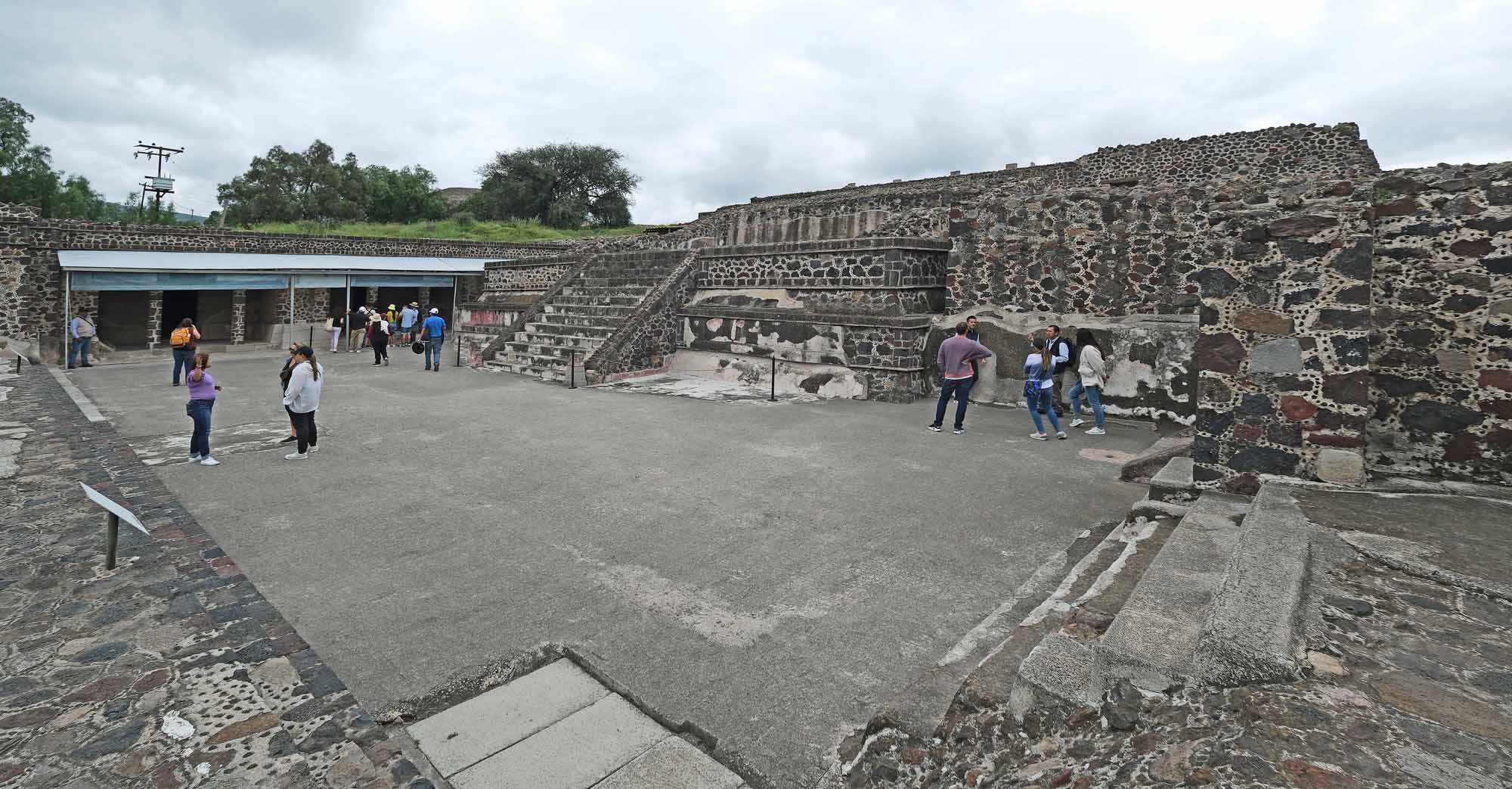
On the right (east) side of the flat square you can see the stairs leading up to the top of the Temple of the Jaguar, which covers the Temple of the Feathered Shell. On its top there must have been a temple room.
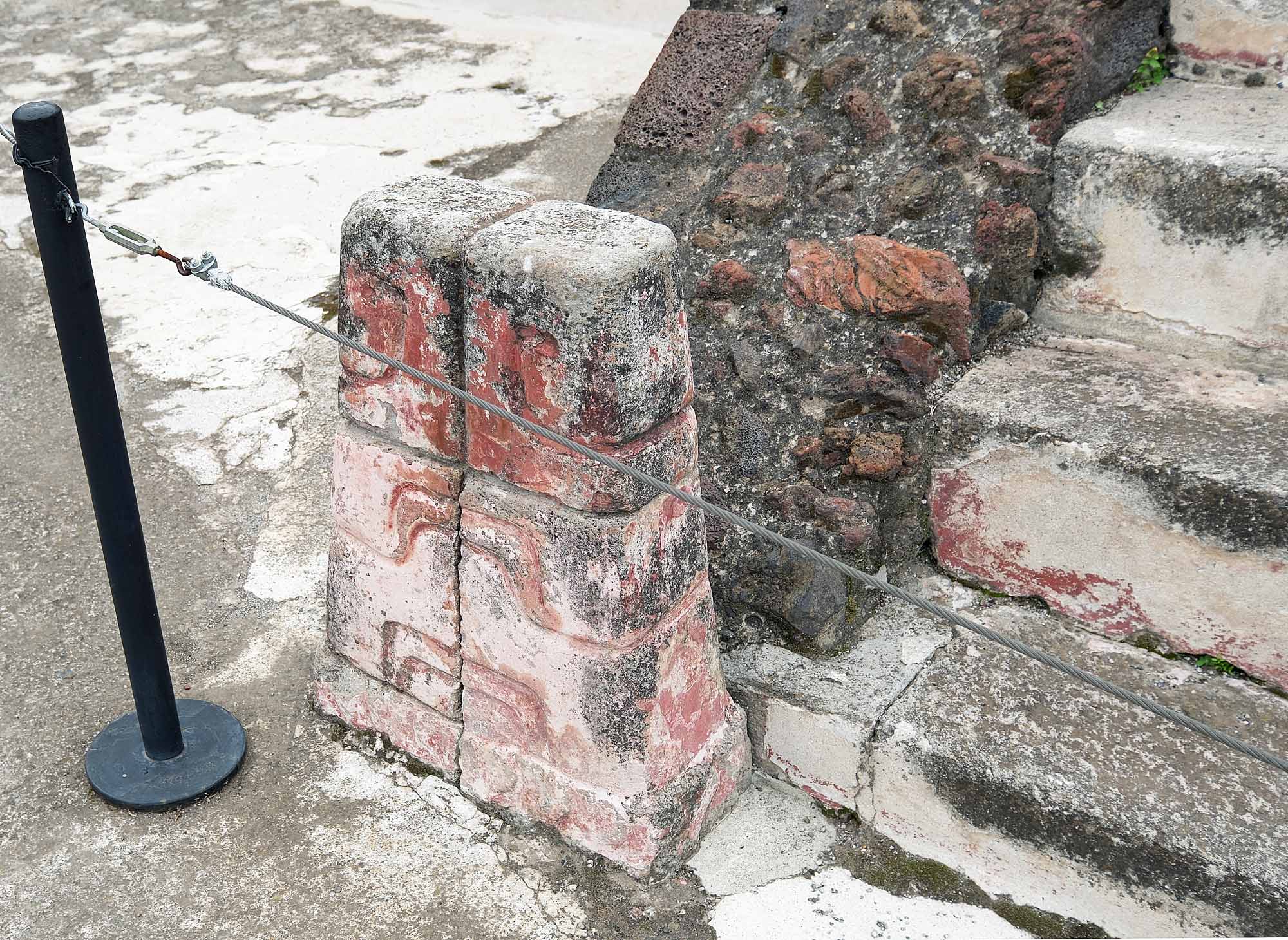
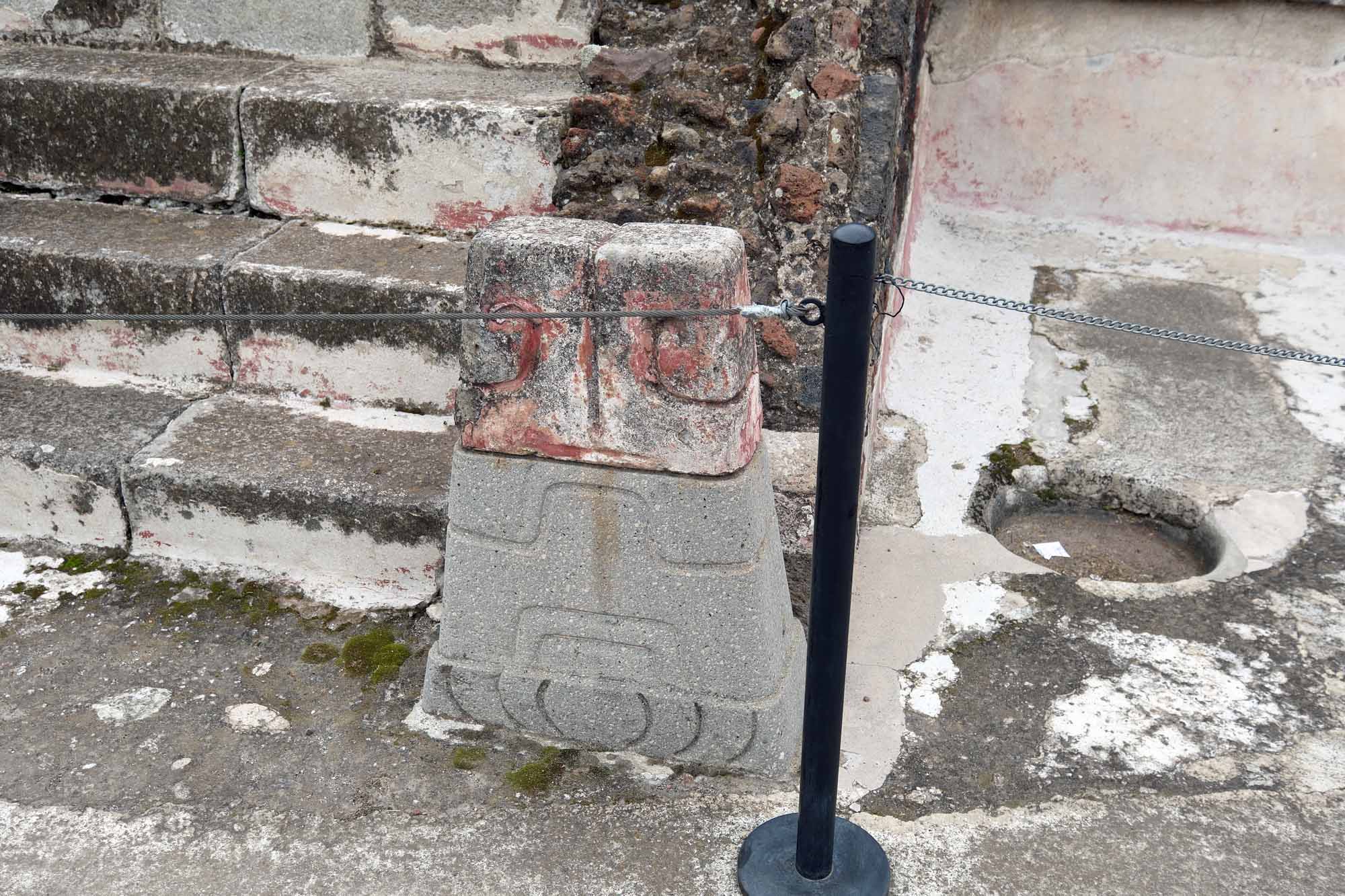
There is a jaguar statue at the bottom of the central staircase. It is a common design, with the top third of the statue being both eyes, the middle being the upper jaw, and the bottom being the lower jaw.
Let's go under the light blue roof.
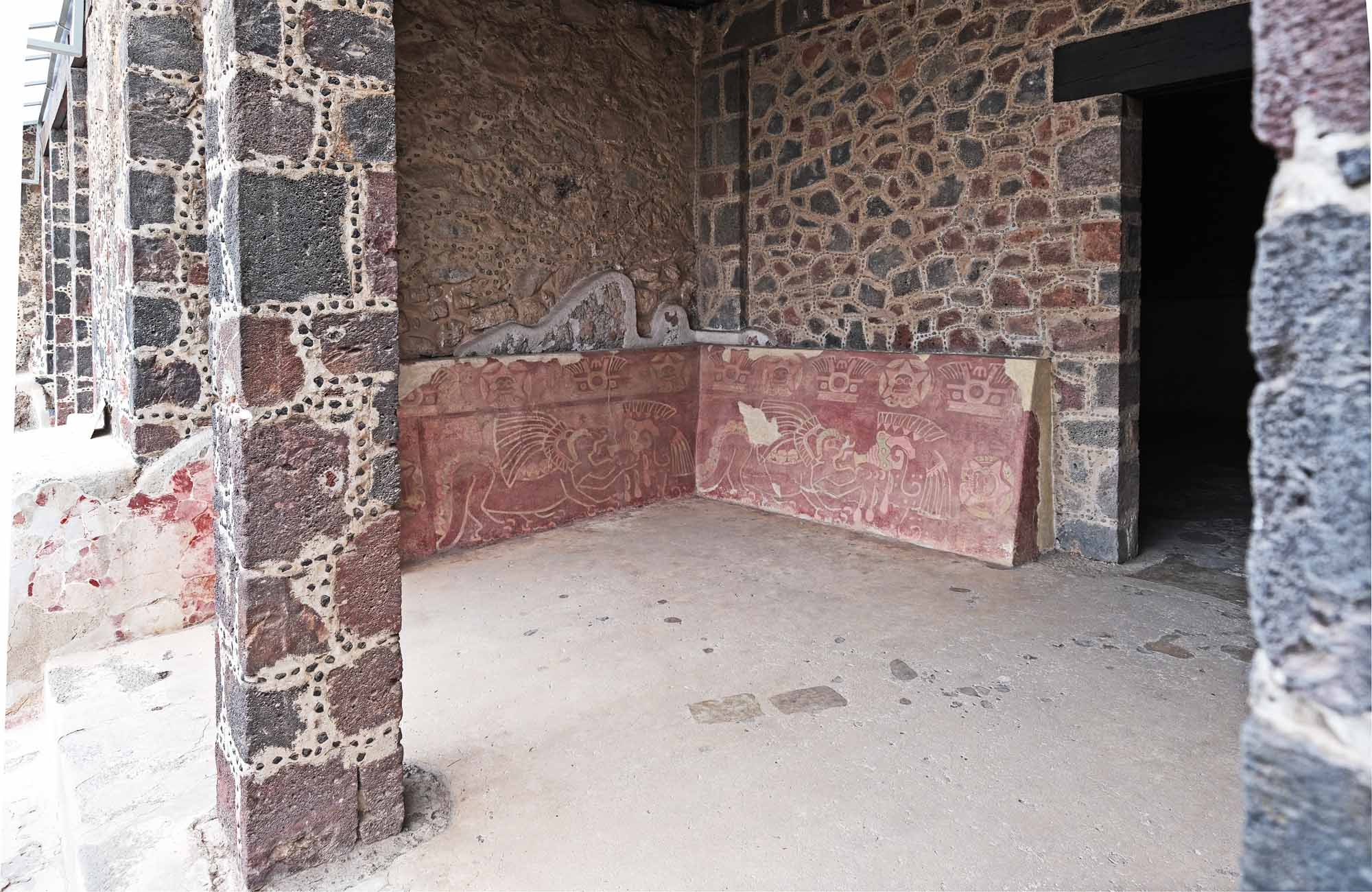
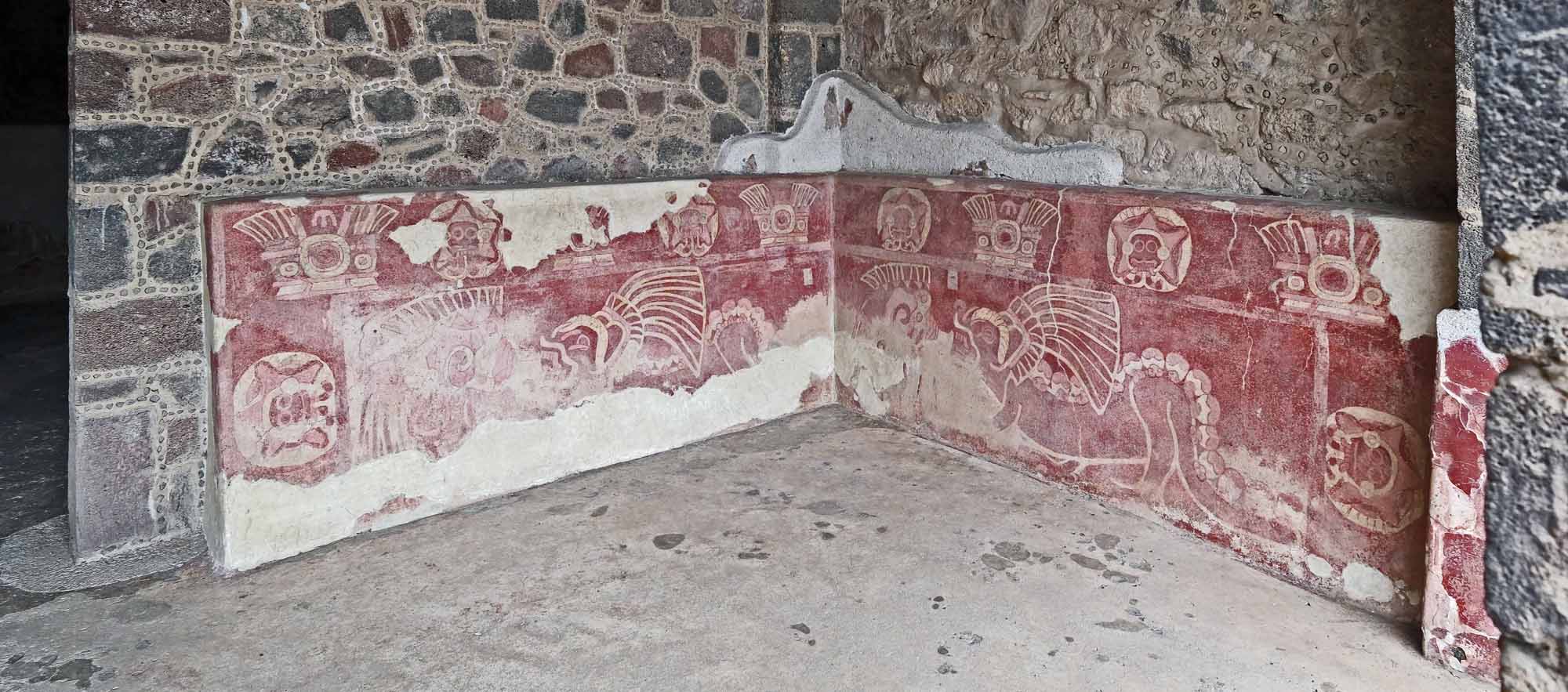
They are roaring jaguars with almost the same design. There are two on each side of the central doorway in each colonnade. There are three identical colonnades lined up, so there seem to be a total of 12. They are probably the same imagery as the first mural we saw.
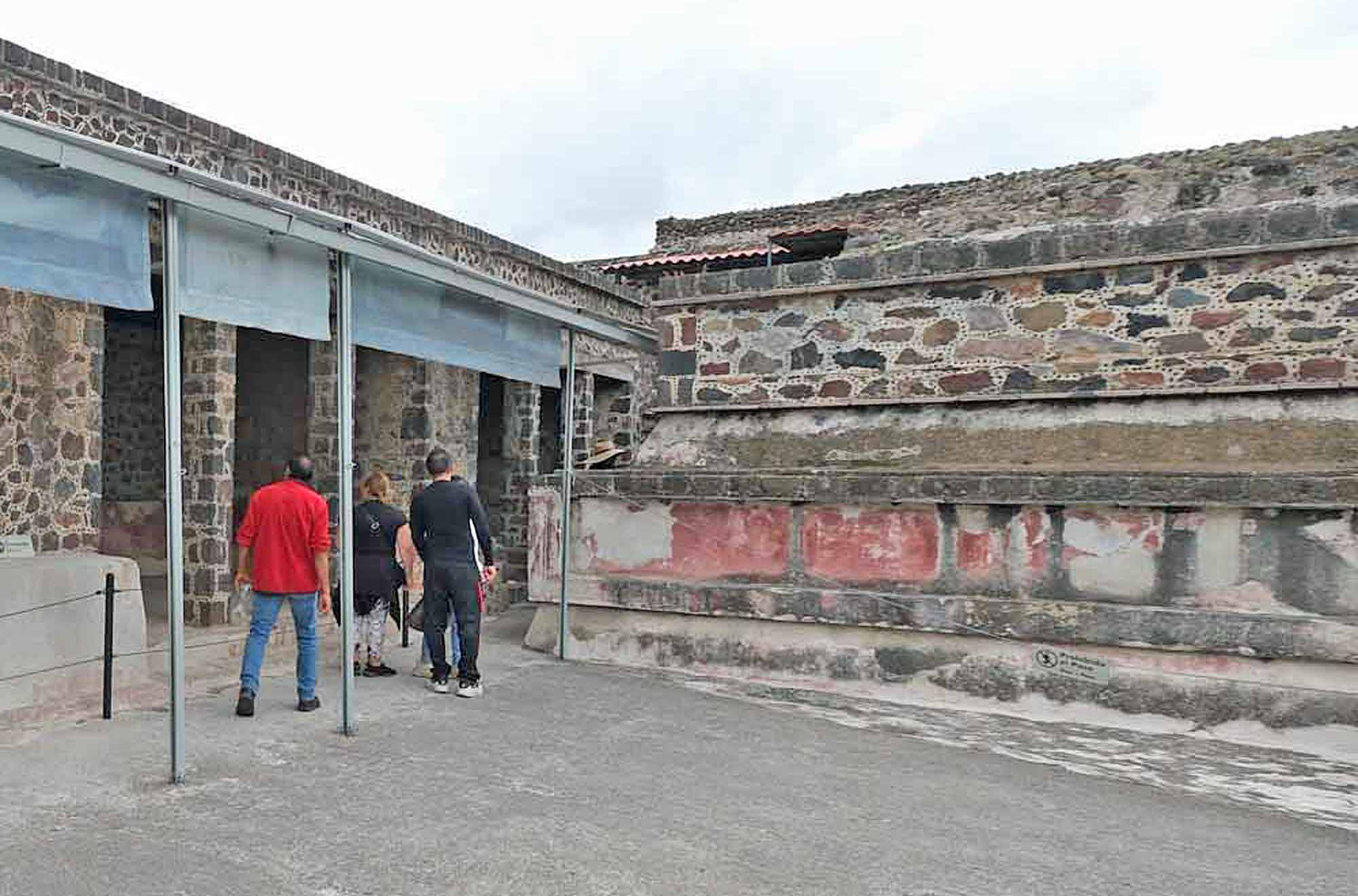
It's possible that every wall facing the courtyard has jaguars painted. Finally, let's go further into the northwest corner.
Route 8↓...Enter through the gate on the left with the light blue roof in the photo below.

You'll come out at a dark gateway on the right.
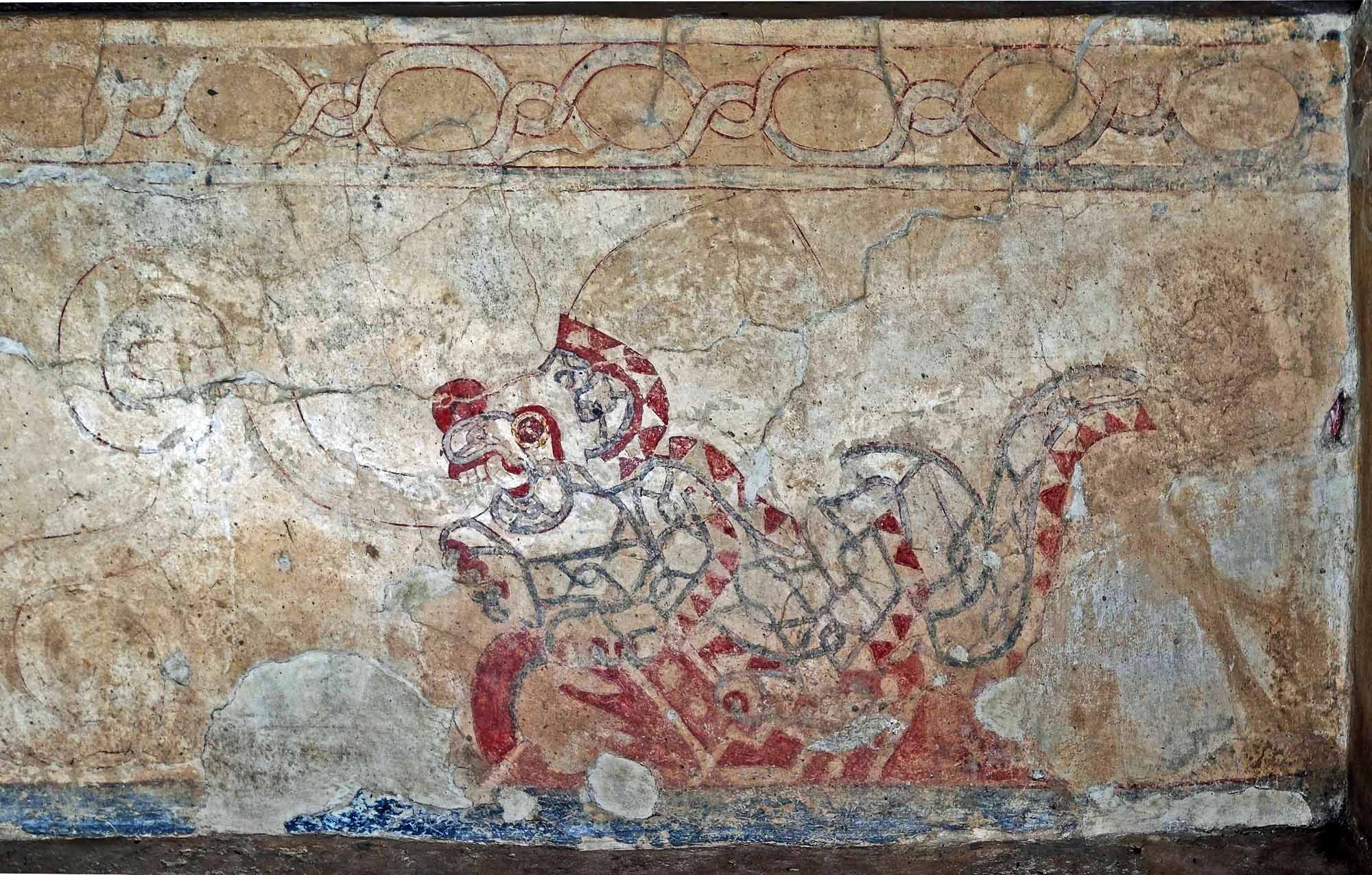
There are murals on the lower wall on the right side. There appear to be six in total, two in front and one on the side, sandwiched between the central entrance to the room behind.
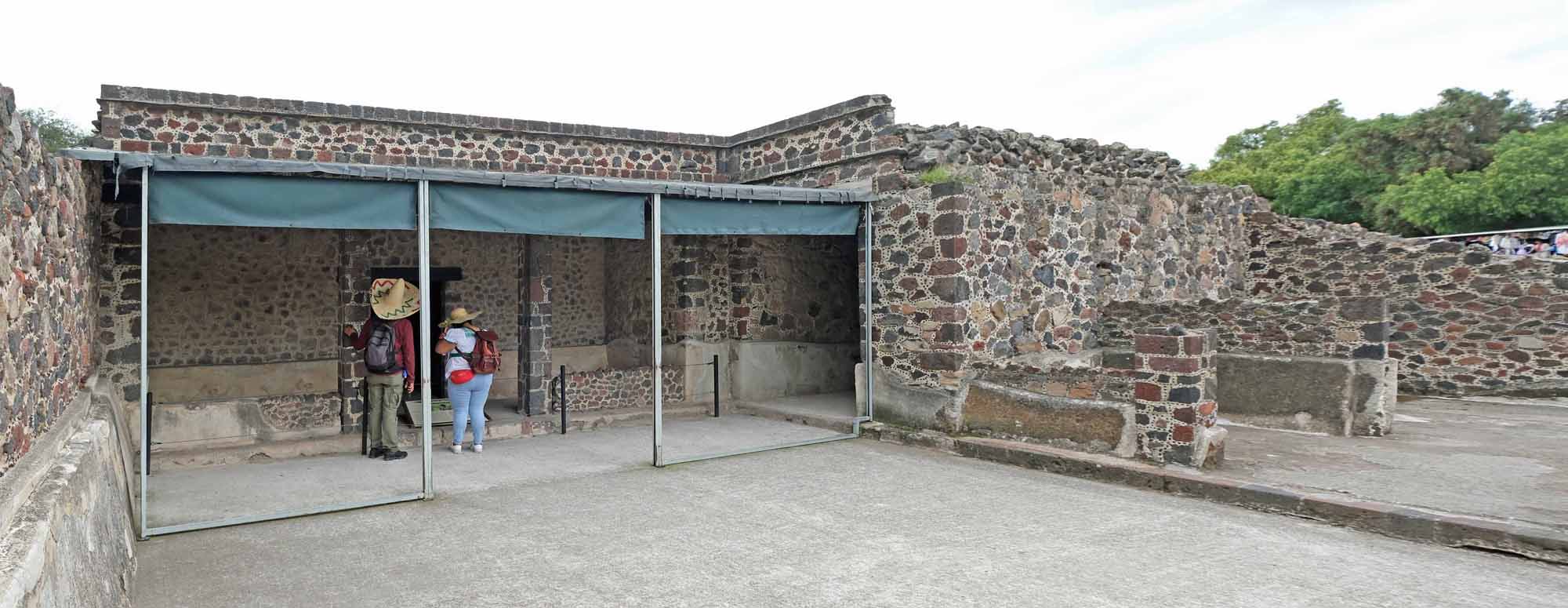
There is also a small courtyard and a living/storage area to the left, which must have been a special space.

The design is different from the Jaguar we saw in the spacious courtyard.
I will post an explanatory sign. The red letters are my imagination.
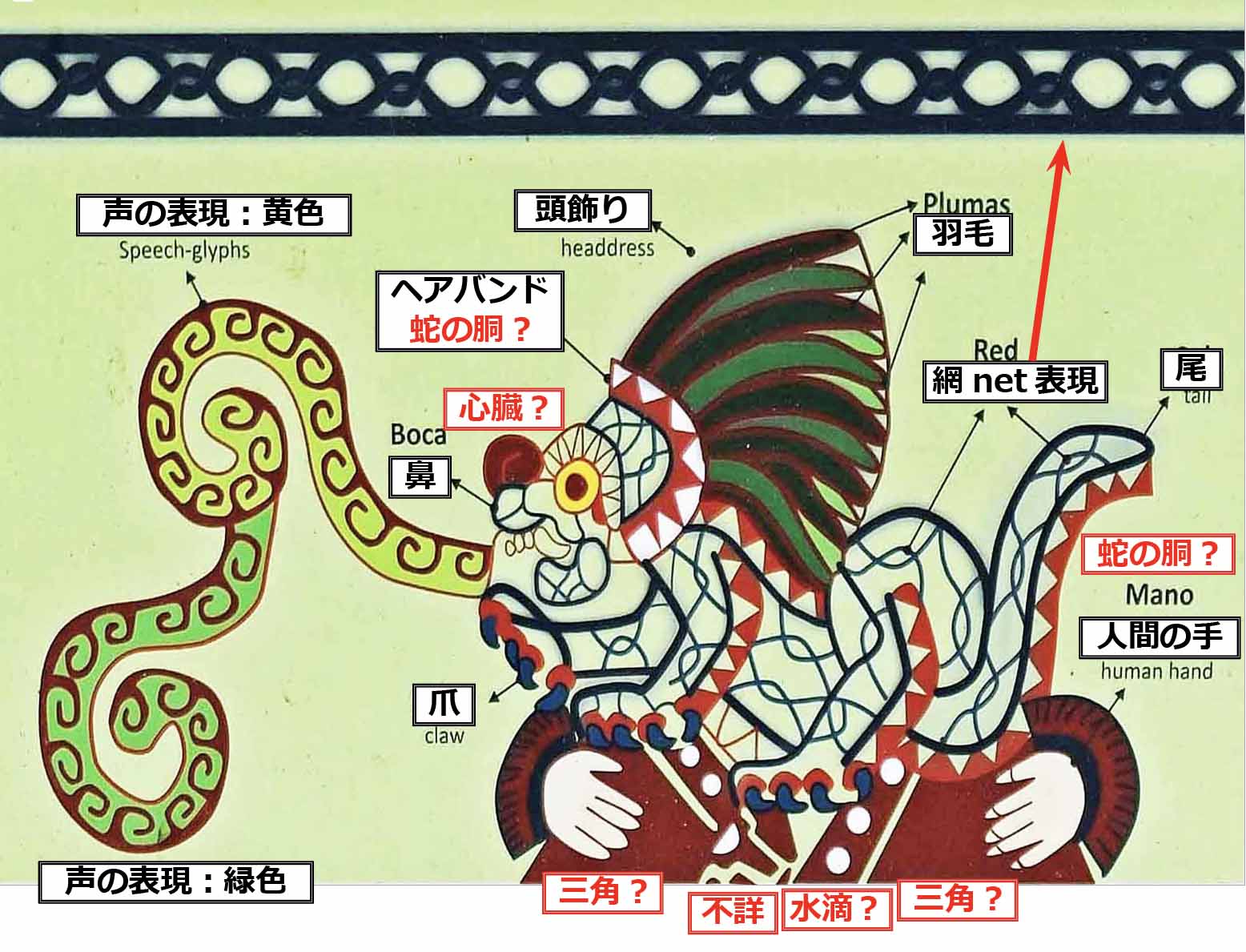
For example, what do you think of my idea that the mesh pattern painted all over the jaguar's body represents the jaguar's elevation to the highest level of deity? God is invisible in reality. However, if we cannot see it, it can lead to the idea that it does not exist. I try to express the invisible jaguar, but, hmm, there is no way to draw it. So perhaps the mesh pattern is used to express transparency.
It may be that the jaguars in the large courtyard was an ordinary god, and the net jaguars was a higher god. Furthermore, human hands can be seen. Since it does not appear that the net jaguar is being held, it is likely that the expression is that the upper part of the human hands from the chest up is the net jaguar. Perhaps it is also intended to represent a "priest who has transformed into the highest god."
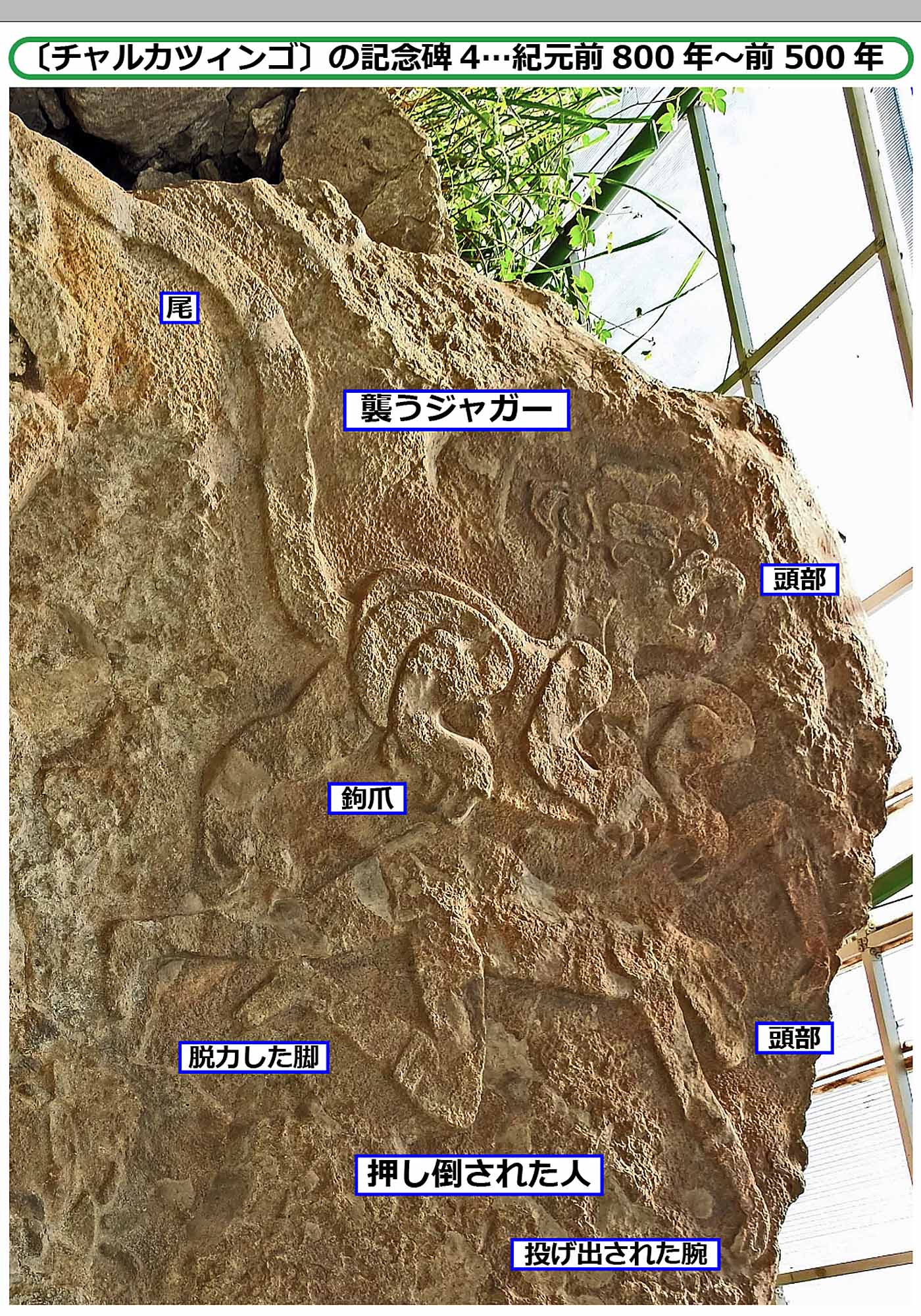
Jaguar gods have existed throughout Mesoamerica since ancient times, as seen in stone carvings at the Chalcatzingo ruin dating from 800-500 BC.
Now, either head back to the souvenir shop area or pass through the Temple of the Feathered Shell again to head to the last temple.
Temple of Quetzalpapalotl = Feathered Butterfly
It was built in 450 AD. Let's look at this place as if we were entering from the front staircase. The white colonnade (antechamber 1) is impressive.
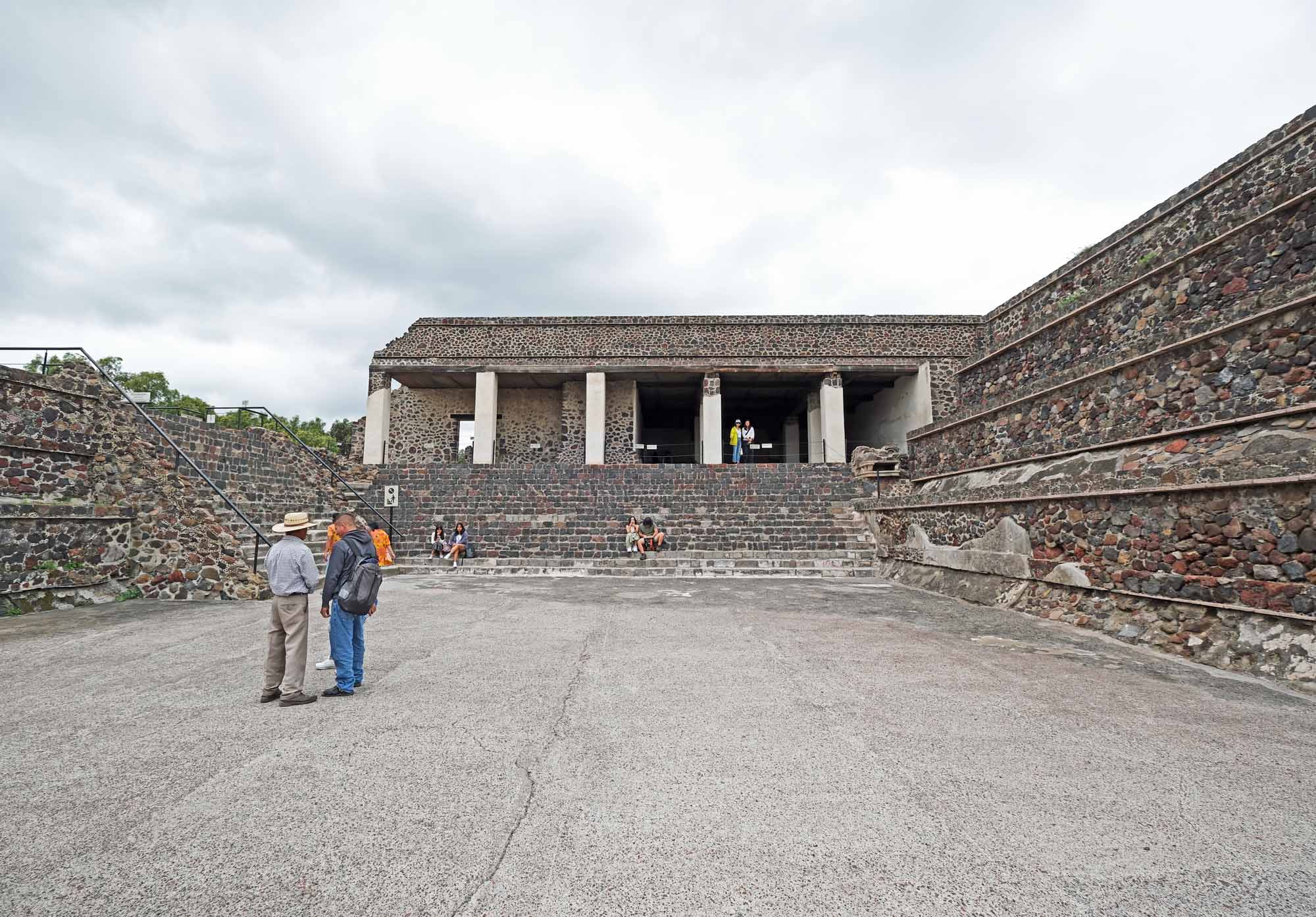

Only on the right at the top of the stairs is there the head of the Feathered Serpent. They look similar. Let's compare them. The one on the right was buried in the Temple of the Feathered Shell.
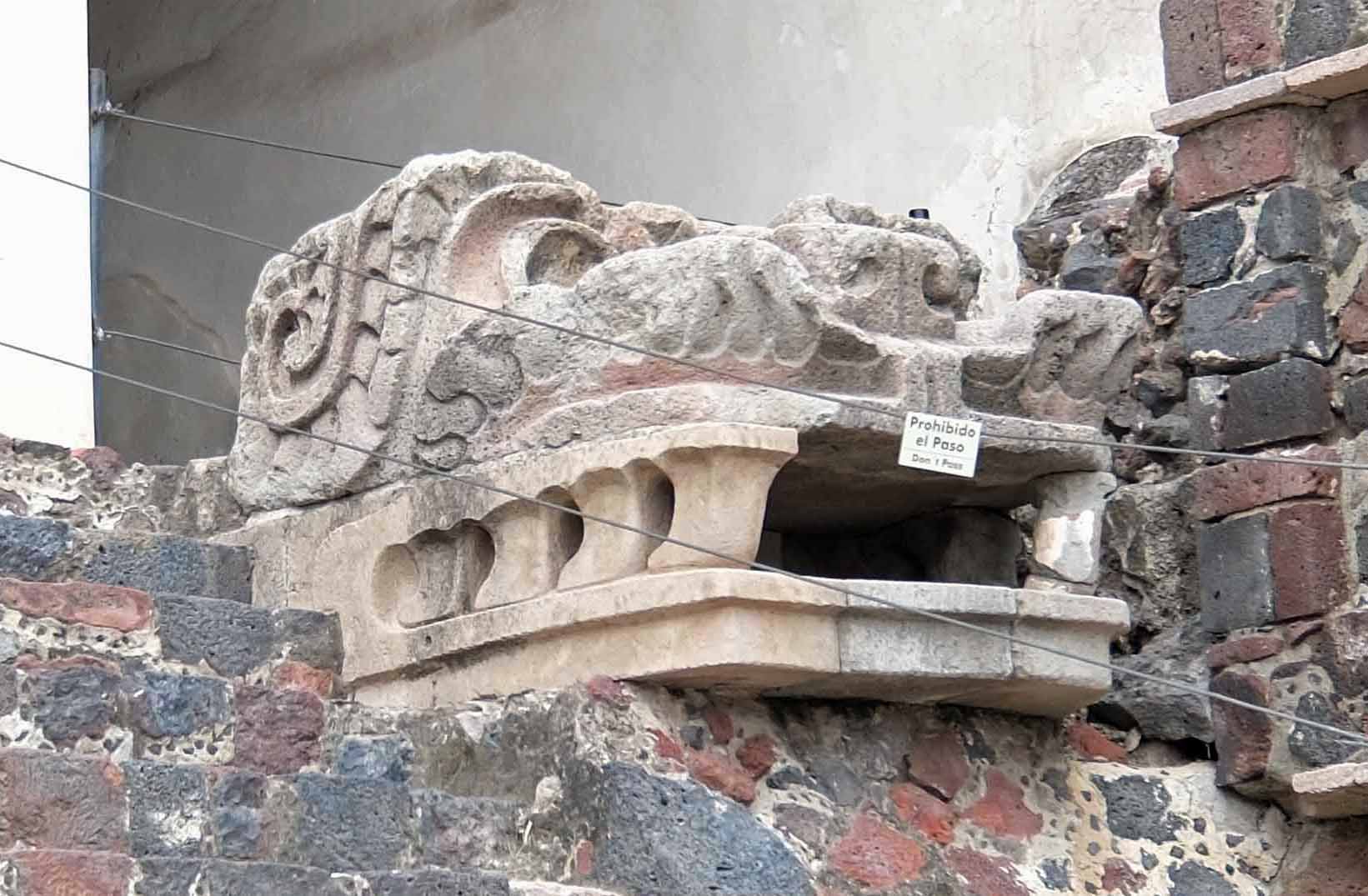
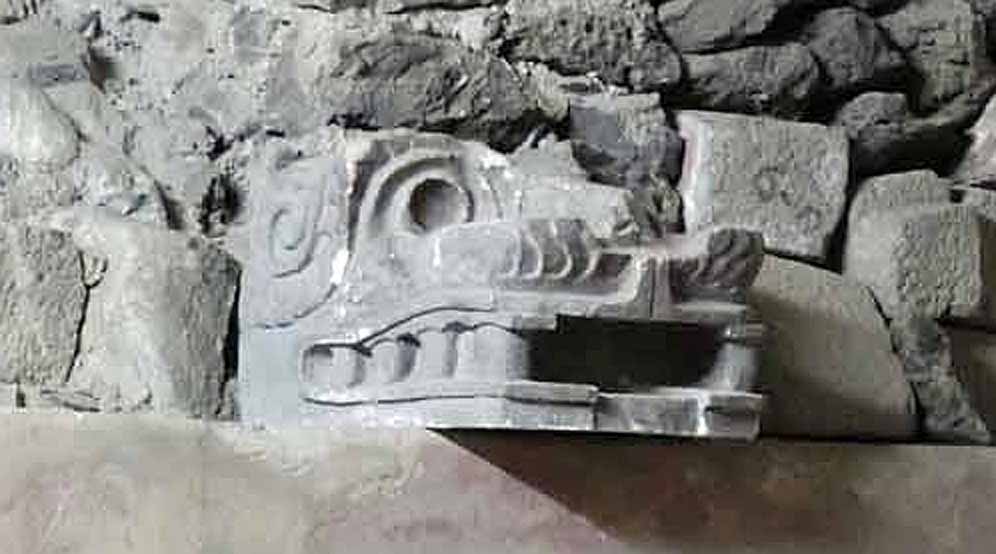
They look similar, but there are some differences in the details. Let's go up the stairs and look back.
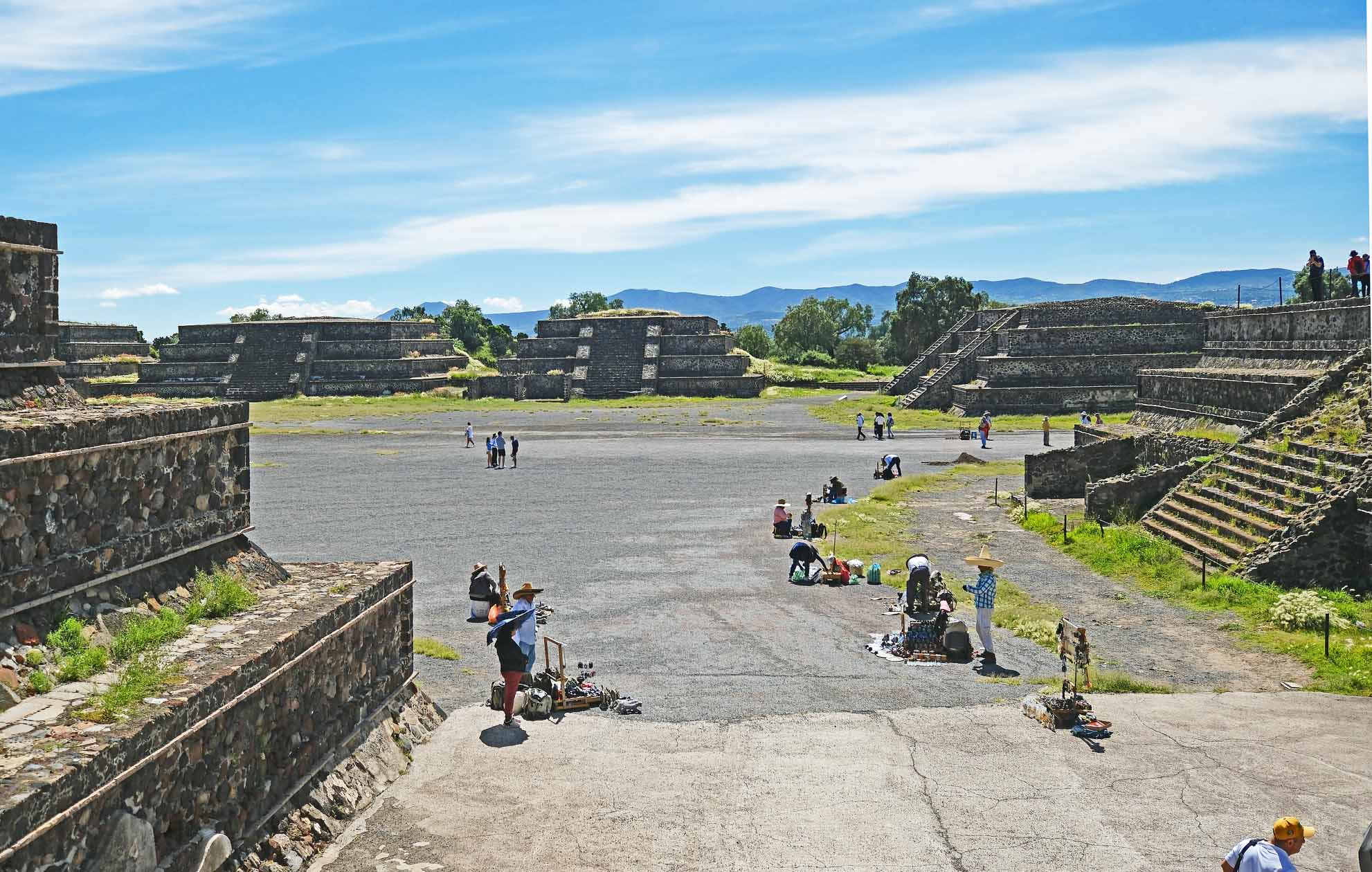
The Street of the Dead is on the right and the Pyramid of the Moon is on the left. It is in a special location, overlooking the throat of the Plaza of the Moon from the side.
。The ceiling of antechamber 1 has been restored. Trees are abundant in the hills surrounding the Teotihuacan Valley.
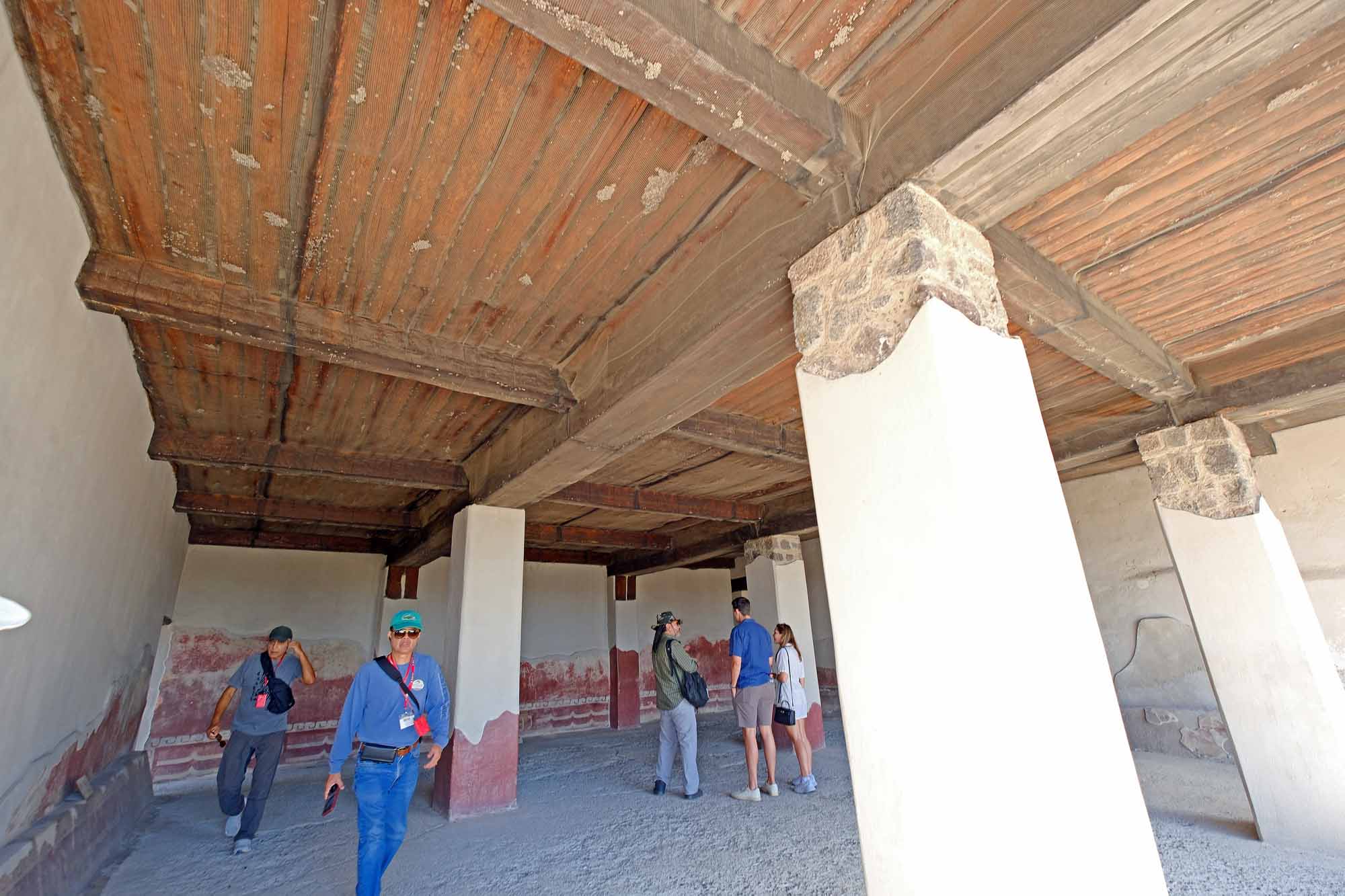
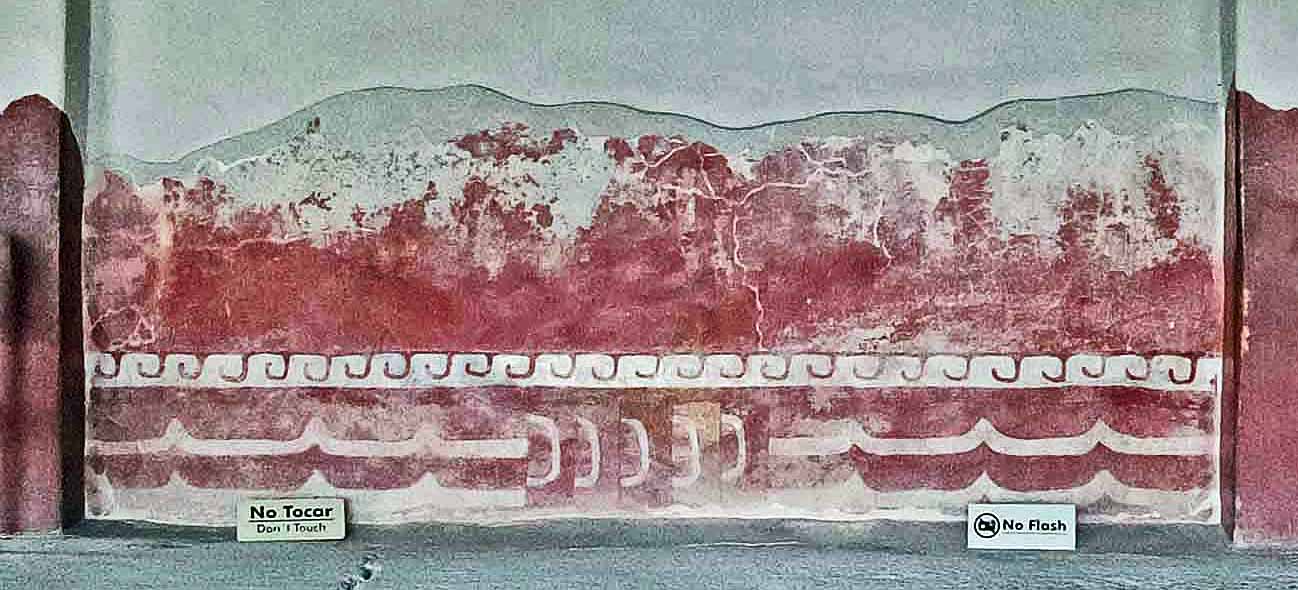
The lower part of the wall is painted with what is probably a "rippling water surface."
Go through the northwest gate.
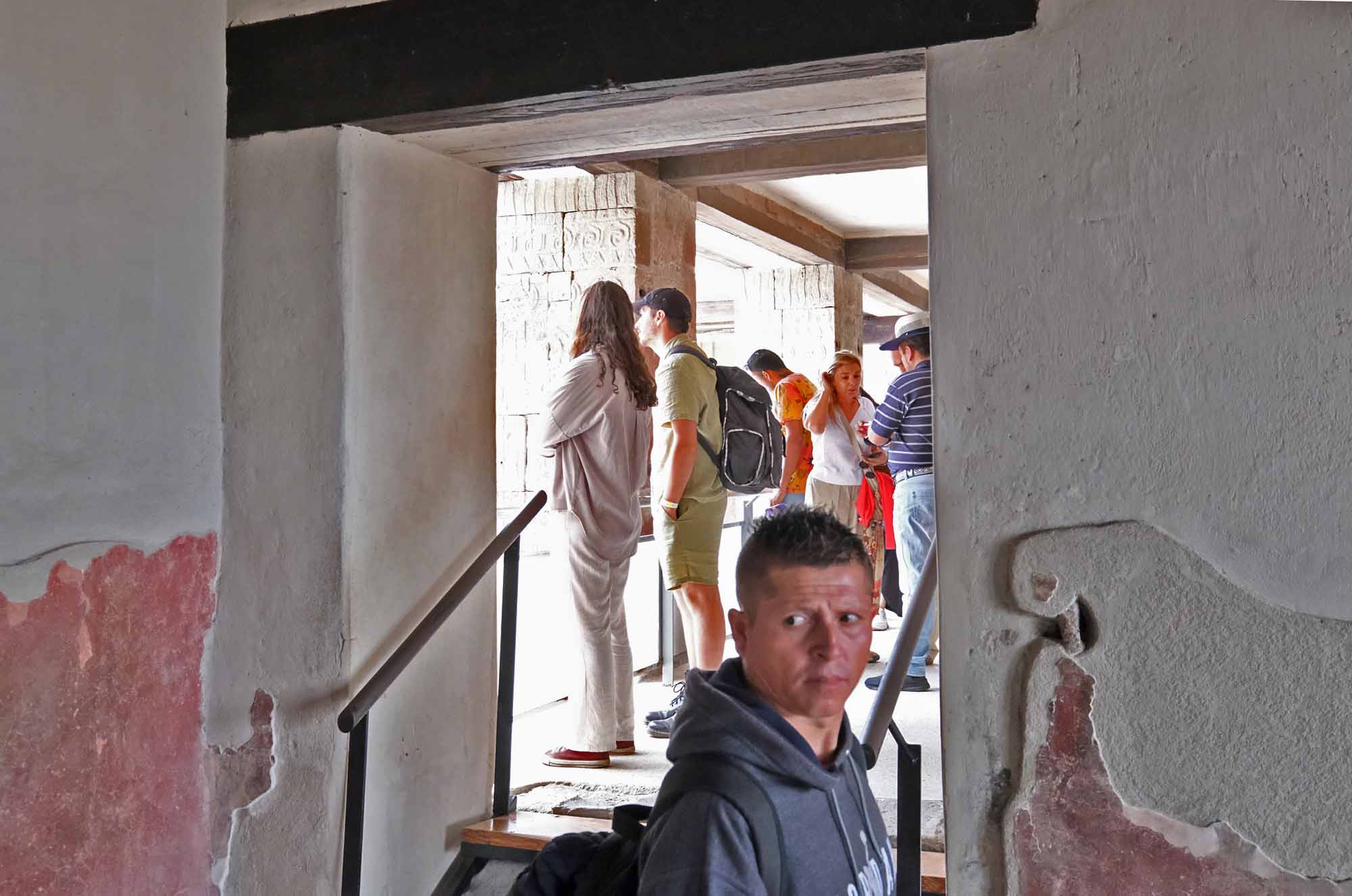
Route 9↓...The courtyard of the Temple of the Feathered Butterfly. The square edge of the courtyard floor is high, and it looks like it could be used to hold water.
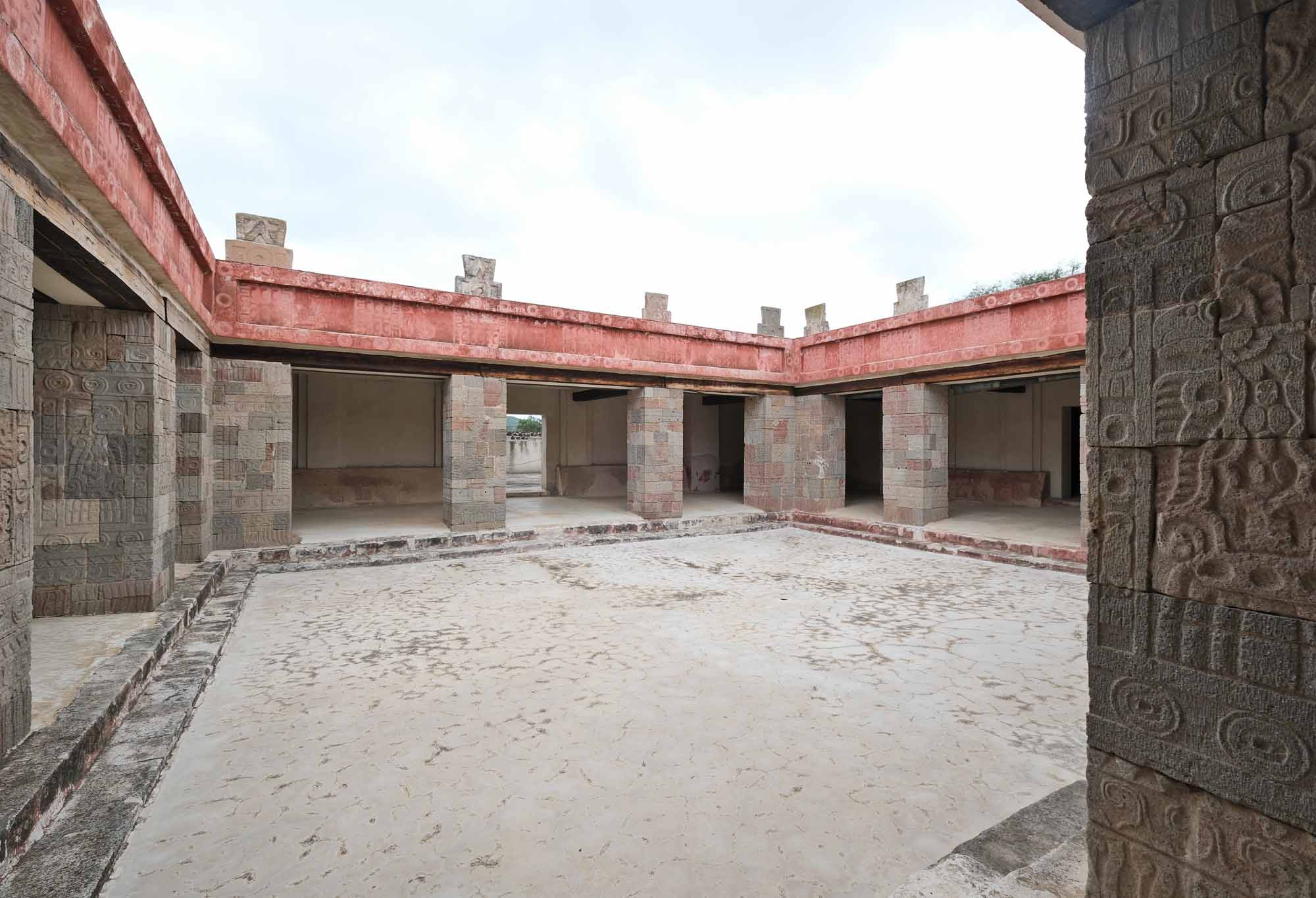
According to the excavation report, the courtyard had collapsed to the point where it was unrecognizable, and traces of a fire that occurred in 550 AD were scattered everywhere. It was painstakingly restored by archaeologists around 1960.
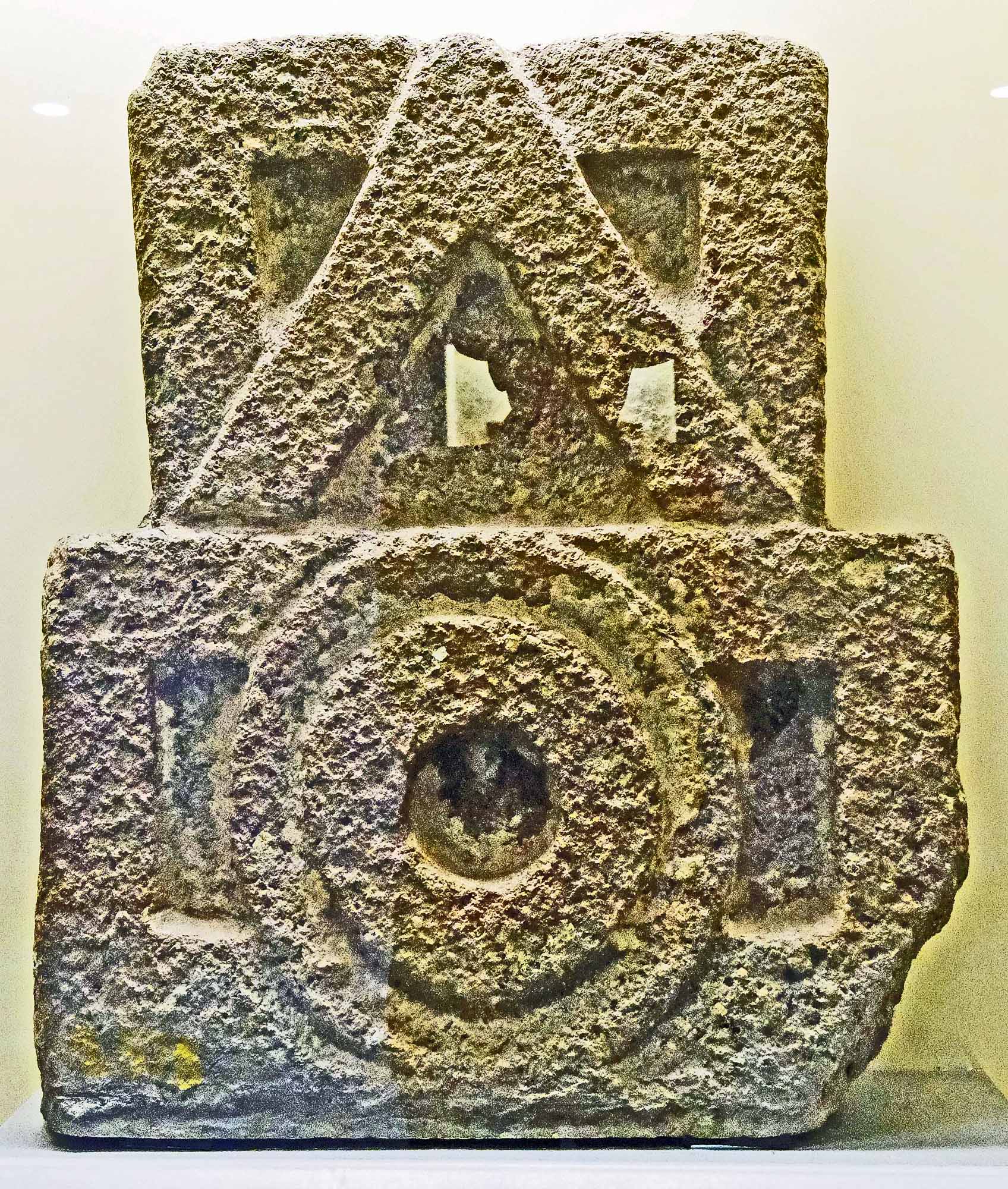
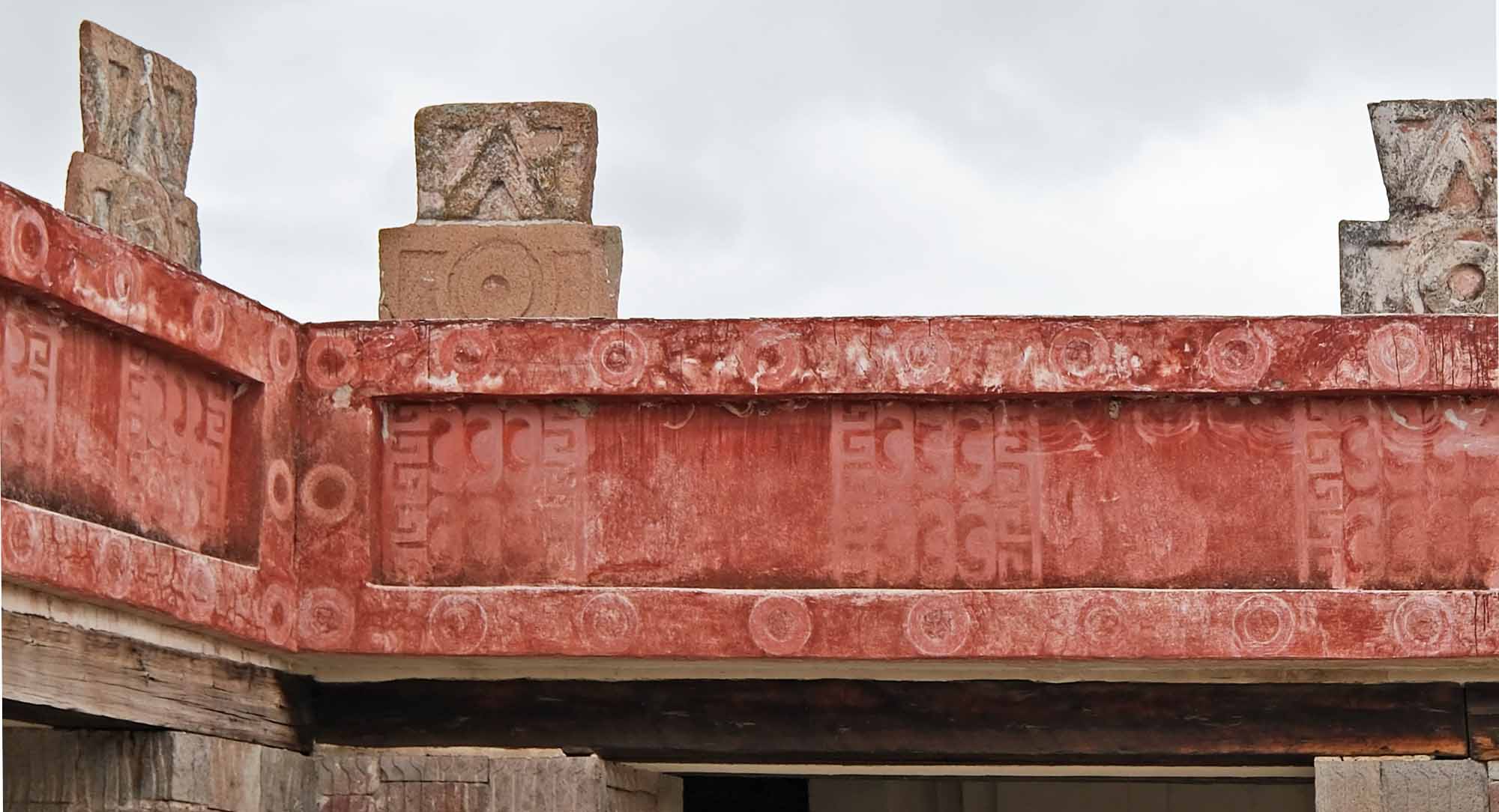
↑At the Cultural Museum. ↑[Temple of the Feathered Butterfly].
It is recorded that an almena stands on the edge of the roof, and that the shape and height of the roof were determined from charred fragments of beams that were lying around, and the image of the red fleece was designed based on that of Antechamber 1.
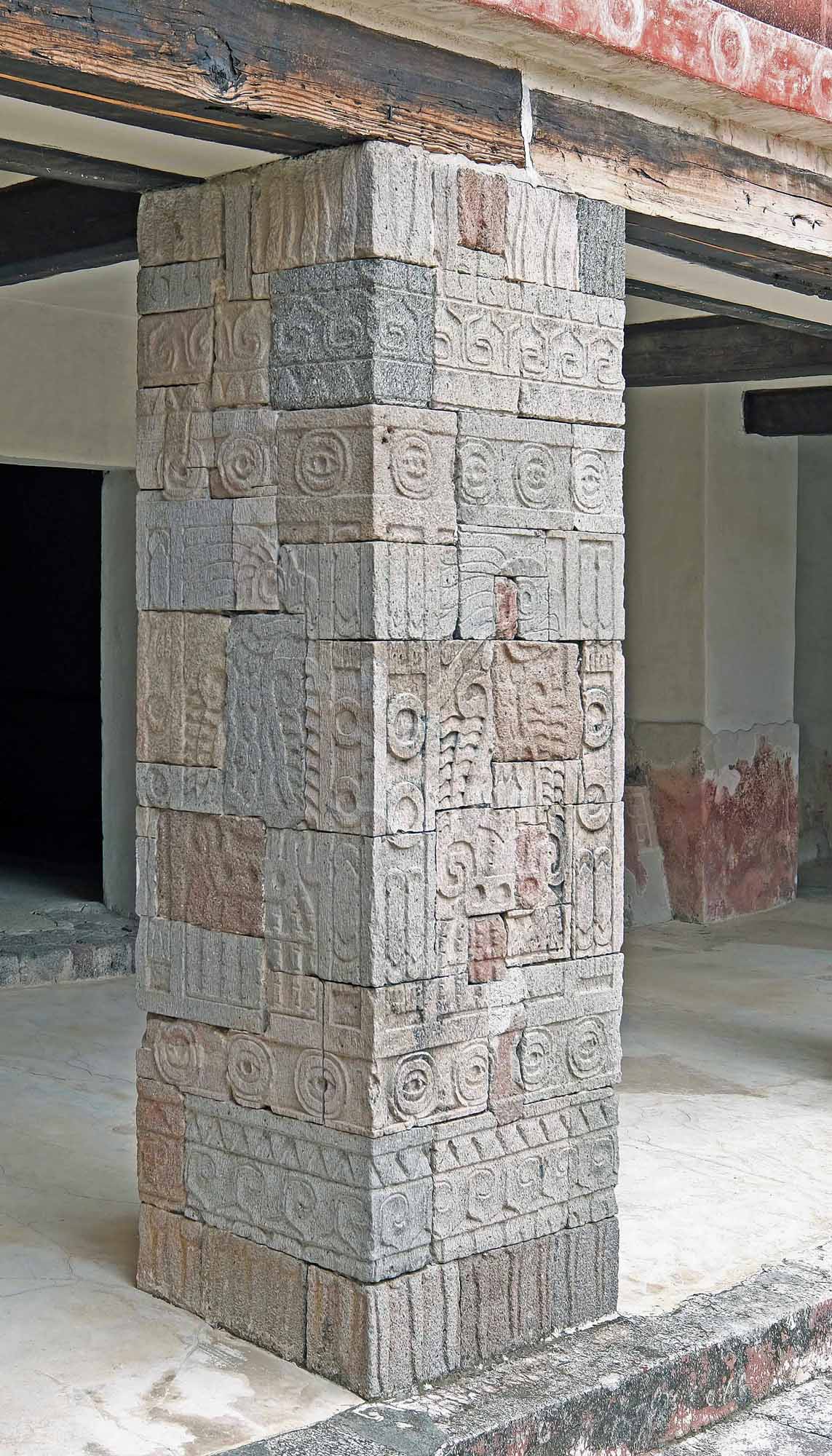
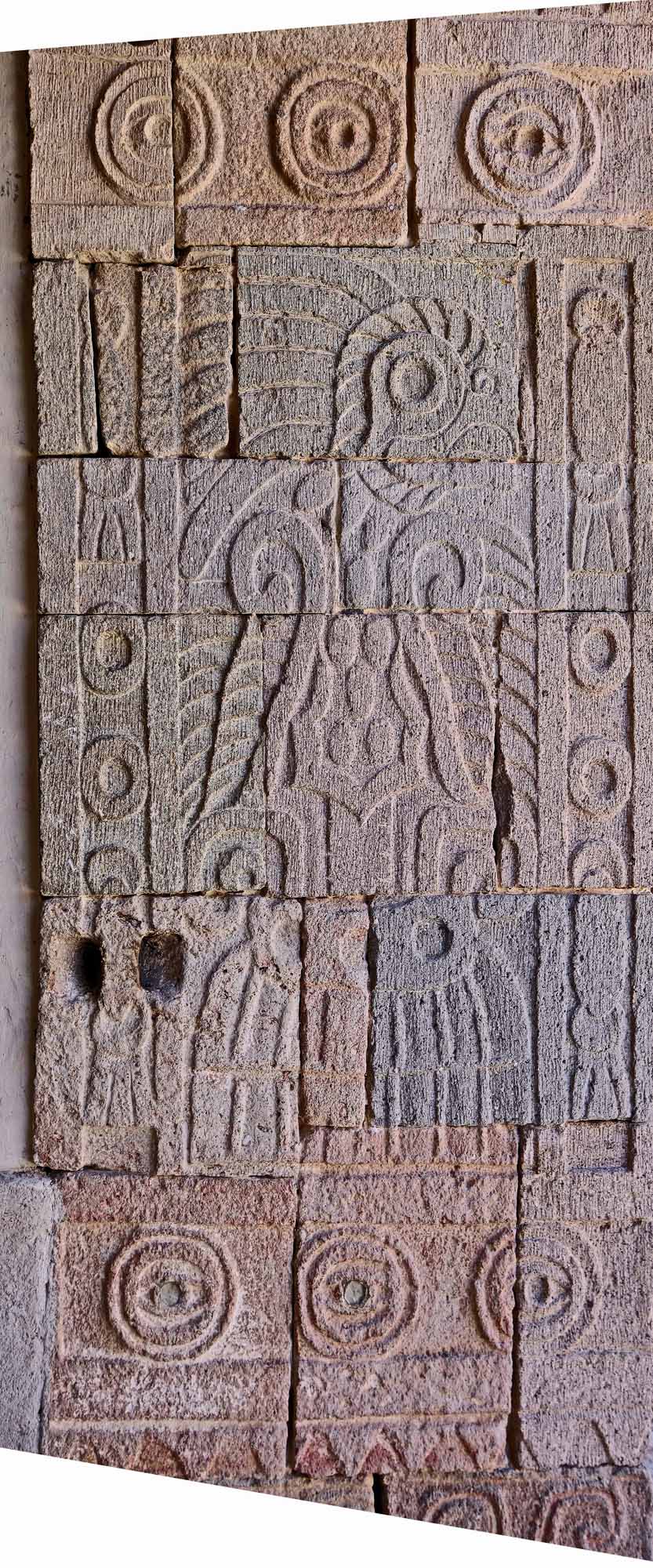
It is a pillar carved with a butterfly with feathers. It is in the center of the second photo. There are double or triple circles arranged above, below, and on both sides, and four "year torches" can be seen above and below the vertical parts on both sides.
The pillar is thought to have originally been carved into a single block of limestone. When it was discovered, it was broken into pieces and scattered. Archaeologists picked up the pieces, put them together like a jigsaw puzzle, and used their inference skills to fill in the gaps. This is why there are differences in color and misalignment of the imagery.
Additionally, somewhere in this temple, a rare, large, petrified gypsum relief was recovered, although its location is unknown. It is believed to be a statue of the god Tlaloc.
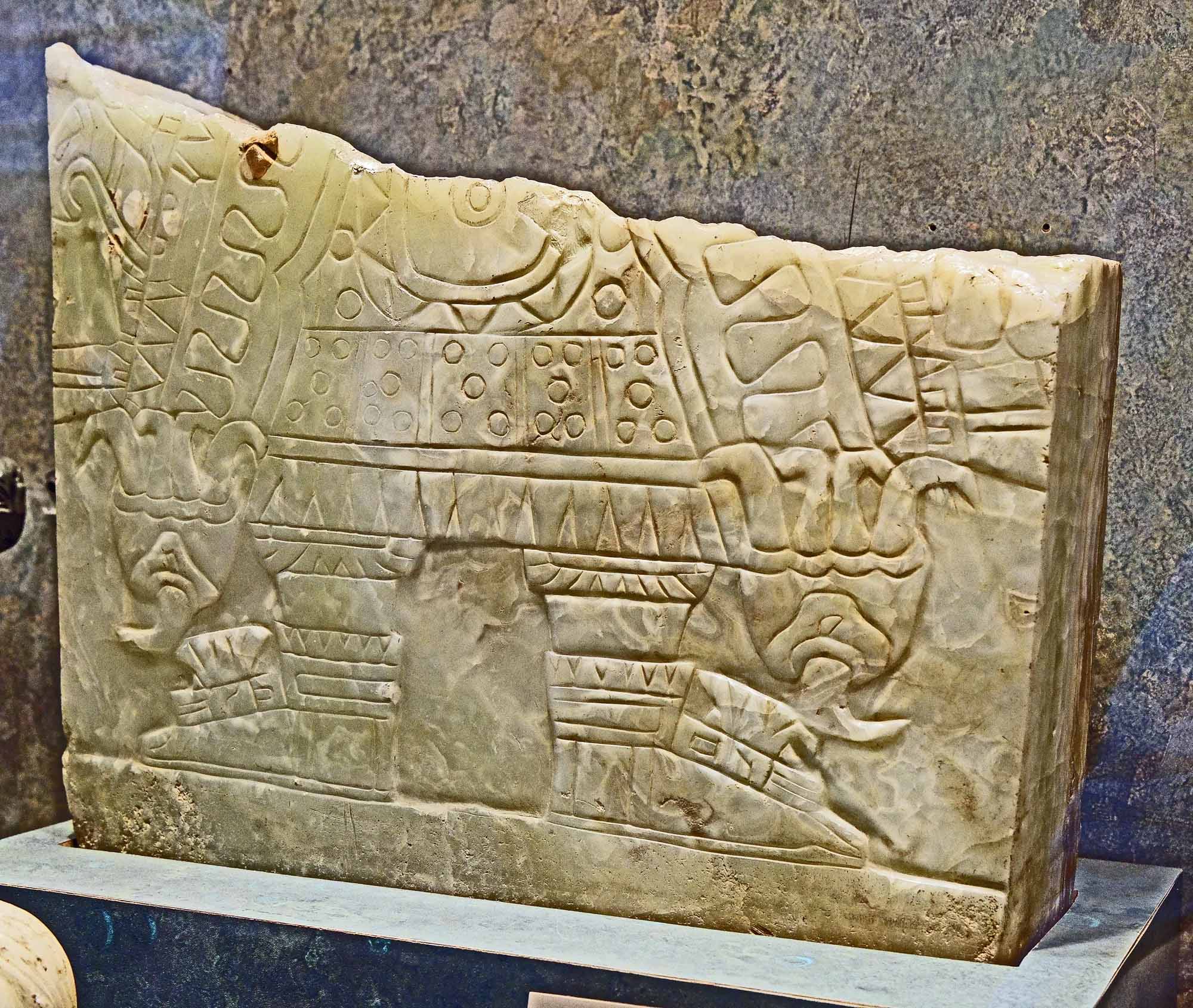
↑at Museum of Anthropology.
Imagine the history of three temples
The three temples were built next to each other in roughly the same location between 100 AD and 550 AD, but the designs displayed are completely different, and no design was inherited from the previous temple.
If I imagine it roughly,
1. The Temple of the Feathered Shell was built in 100 AD. However, the bloodline died out and there was no one to care for it in 250 AD.
2. After being left abandoned for 100 years, a new bloodline built the Temple of the Jaguar on the west side in 350 AD.
3. Another 100 years later, in 450 AD, another bloodline built the Temple of the Feathered Butterfly on the east side.
I would imagine that this was the case.
Regarding the restoration of buildings
Archaeologists will start with the evidence they see in front of them. Whether stone, wood, sticks, or mud, the foundations of the walls are their starting point. Any gaps in the foundations will be considered doorways. A floor plan can probably be drawn.
To fully restore a building, it is necessary to know its exact height. It is impossible to determine whether the ceiling was 165cm or 190cm unless part of it remains standing. It would be premature to conclude that there was a ceiling/roof just because rotten wood has been excavated.
The next generation of archaeologists began to say that measurements derived from circumstantial evidence are hypotheses based on your own respectful academic experience, not evidence for everyone. This opinion became mainstream, and, for better or worse for tourists, no complete restoration of the building has been carried out since the 21st century. The courtyard of the Temple of the Plumed Butterfly remains, a result of archaeological work from the 1960s.
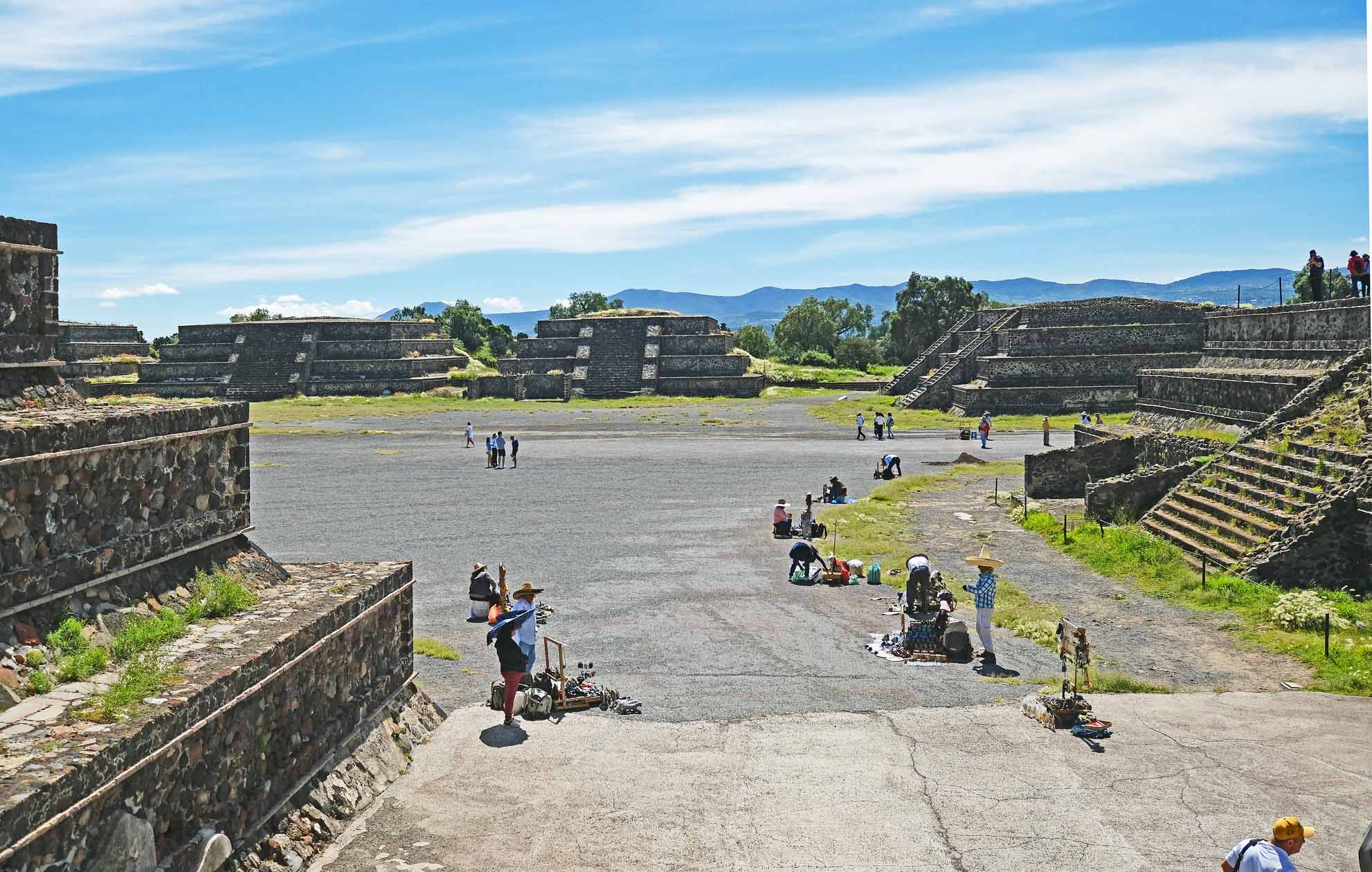
Let's look again at the east from the first antechamber of the Temple of the Plumed Butterfly. The causeway to Sala was on the green plain in the background, slightly to the right of the photo.